The first time a homeowner asks me which propane tank they should get, I usually answer with a question of my own: how long are you planning to stay in this house? That single answer changes the math more than anything else. A tank is a 20-to-30-year decision, and the two options in front of you behave very differently over that stretch.
I spent 12 years as a licensed electrician wiring standby generators, and the propane side of the job pulled me in fast. I’ve stood in muddy trenches watching a 500-gallon tank get lowered into the ground, and I’ve bolted plenty of them onto concrete pads next to a house. Both work. Both keep the lights on. But they cost different money and ask for different things from you.
So let’s settle the underground vs above ground propane tank question the way I’d talk it through with a neighbor leaning on the fence.
Key takeaways
- Above-ground tanks cost far less up front and are easier to inspect and service; underground tanks cost more but disappear from view.
- Underground (buried) tanks need corrosion protection and permits, which is where most of the added cost comes from.
- Both feed a generator the same way, so your fuel appliance choice doesn’t force the decision.
- Your climate, yard space, and how long you’ll own the home usually decide it faster than raw price.
What actually separates an underground vs above ground propane tank
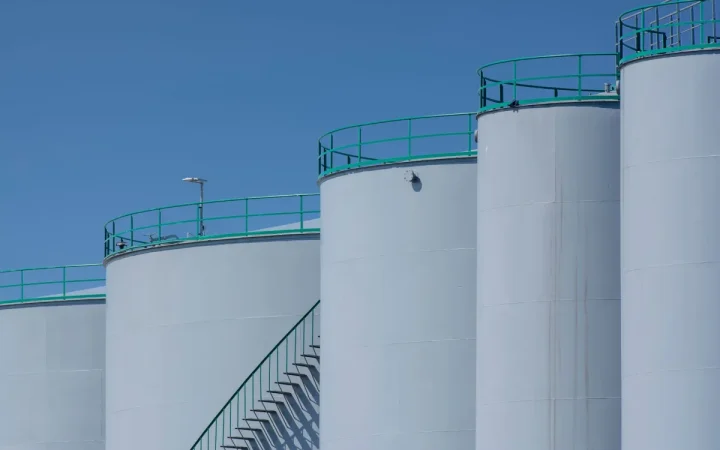
Above-ground tanks sit on a pad in your yard. You can walk up, read the gauge, and see rust or a leaking fitting with your own eyes. They’re the white or silver cylinders you’ve probably driven past a hundred times.
Underground tanks are the same pressure vessel with extra armor. They get a heavy corrosion-resistant coating, sometimes a sacrificial anode, and they’re buried with only a small dome sticking up for the fill and gauge. Out of sight, and quieter to live next to.
A mistake I see all the time: folks assume the underground tank is a totally different product. It isn’t. It’s built to a tougher spec because dirt and moisture are hard on steel, but it feeds your appliances through the same regulator and line.
The cost gap is real, and it shows up in two places
On a job last winter, a couple in a new build got quotes for both. The above-ground 500-gallon setup landed around $2,000 installed. The underground version of the same capacity came in near $4,500. That gap wasn’t the tank alone.
Where the money goes
Excavation is the big one. Digging a hole, setting the tank on a bed of sand or pea gravel, and backfilling adds labor and machine time. Then there’s the anti-corrosion package and, in many towns, a stricter permit and inspection.
Above-ground installs skip most of that. A level pad, a set of lines, and you’re running. If you’re weighing fuel costs against that install price, my breakdown of how much propane a generator uses will help you size the tank so you’re not overpaying twice.
| Factor | Above-ground | Underground |
|---|---|---|
| Typical install (500 gal) | $1,800–$2,500 | $4,000–$5,500 |
| Visible in yard | Yes | No (small dome only) |
| Inspection ease | Easy, by eye | Harder, gauge only |
| Corrosion risk | Low, but weather-exposed | Managed with coating/anode |
| Lifespan | 25–30 years | 20–30 years |
Safety and weather: the part people underrate
Buried tanks have one clear safety edge. The surrounding earth keeps the propane at a steadier temperature and shields the tank from a falling branch, a car backing into it, or a wildfire’s radiant heat. In hot climates, that stable temperature also means fewer pressure swings.
Above-ground tanks are exposed to all of it. That’s not a dealbreaker, but in a region with wildfire risk or brutal sun, it matters. In cold country the reverse can bite you: a very cold buried line can still deliver, but an above-ground tank in a deep freeze may see its pressure drop if it’s undersized.
Never bury a tank that wasn’t built for it. An above-ground tank dropped into a hole will corrode and fail. The National Fire Protection Association’s NFPA 58 code governs how each type must be installed. Always use a licensed installer who pulls the permit.
Living with each one, day to day
Above-ground wins on maintenance simplicity. You can eyeball the gauge, spot a problem, and a service tech can reach every fitting without a shovel. If something goes wrong with a buried tank, diagnosis is slower and digging may be involved.
Underground wins on quiet living. No white cylinder parked in your sightline, no mowing around it, no HOA letters. For a lot of homeowners, that clean yard is worth the premium all by itself.
Refills are identical either way. The delivery truck pulls up, connects to the fill valve, and tops you off. Where you keep the tank doesn’t change how the propane gets in.
Size up, not down. A 500-gallon tank instead of a 250 means fewer deliveries and better winter pressure, and the price jump between the two is smaller than most people expect. You’ll refill roughly half as often.
Which one fits your generator plan
Propane pairs beautifully with standby power because it stores for years without going stale, which is a big reason I steer people toward it over gasoline. If you’re still deciding on fuel at all, weigh the tradeoffs in my rundown of generator fuel types compared and the honest look at propane generator pros and cons before you commit to any tank.
Neither tank type limits your generator size. A 250-gallon tank can feed a small 10 kW unit for days; a 500 or 1,000 will run a whole-home 22 kW system through a long outage. If diesel is still on your list, my notes on diesel generators for home backup cover why I still land on propane for most houses.
A quick self-check before you sign
- I know how many years I plan to stay in this home.
- I’ve measured a spot with the required setback from the house and property line.
- I’ve asked my town about permits for buried tanks.
- I’ve sized the tank to my generator’s real runtime needs.
- I’ve priced at least two licensed installers, not one.
Making the call without second-guessing it
If you’re staying put for the long haul and the extra $2,000-plus doesn’t sting, bury it and enjoy the clean yard. If you’re budget-focused, might move in a few years, or just want the easiest tank to service, put it above ground and don’t look back.
Either way, get the tank sized right and installed by someone licensed, then fold it into your regular upkeep using my generator maintenance checklist. A well-installed tank of either kind will quietly do its job for a quarter century. For broader safety guidance on storing and using propane at home, the U.S. Department of Energy’s propane systems overview is a solid, no-nonsense reference.