Most folks size a generator around the stuff they can see running. The fridge hums, the furnace blower whooshes, a couple of lights are on. Then someone takes a shower on day two of an outage, the electric water heater kicks on, and the generator either bogs down or trips off entirely.
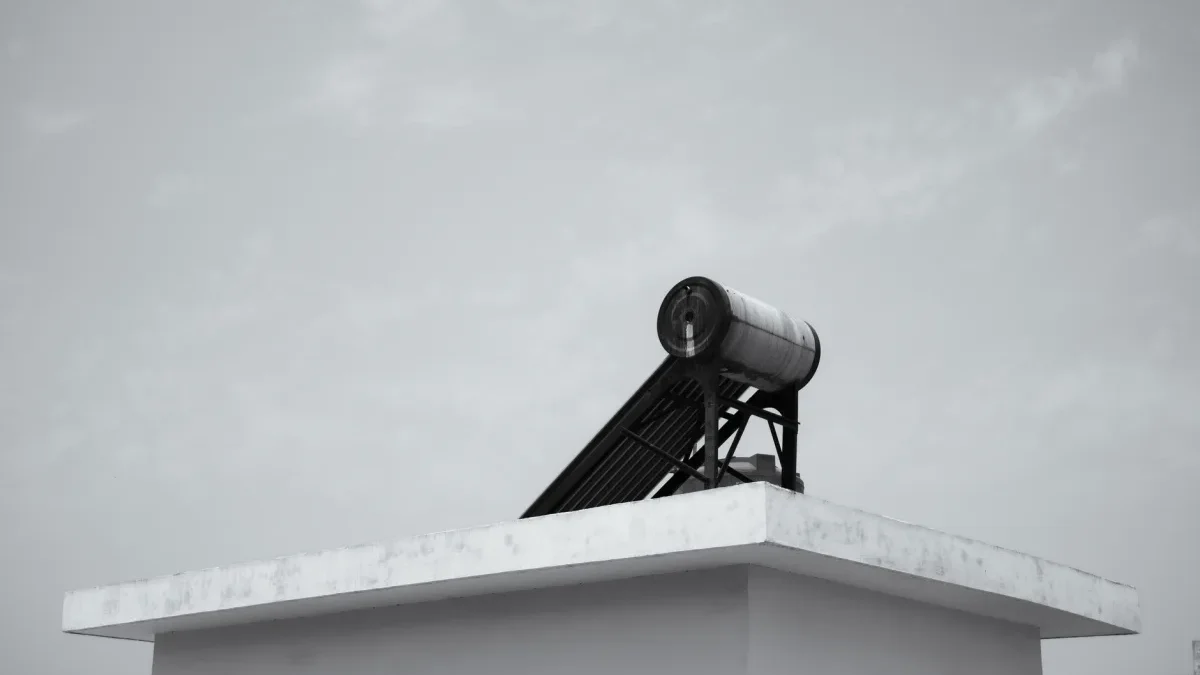
I spent twelve years pulling wire and wiring in backup systems, and the electric water heater is the appliance that catches more people than any other. It’s silent. It has no fan, no motor you can hear. But a standard residential unit pulls about 4,500 watts the whole time its element is heating, and that’s a big steady chunk to hand a portable unit.
So let’s figure out what a generator for water heater duty actually needs, and where you can be smart instead of just buying bigger.
Key takeaways
- A typical 40-50 gallon electric water heater draws around 4,500 watts while heating, no surge, but a heavy continuous load.
- To run it alongside a fridge, furnace, and lights, plan on a generator rated for at least 7,000-8,000 running watts.
- The cheapest fix is a manual approach: shut the water heater breaker off, let other things run, then heat water in short windows.
- Gas or propane water heaters barely move the needle, the wattage problem is unique to electric resistance heating.
Why an electric water heater is such a heavy generator load
Electric water heaters make heat by shoving current through a resistance element, the same way a toaster does. There’s no efficiency trick happening, the power in becomes heat, more or less one for one.
A common 4,500-watt element runs on 240 volts and pulls right around 18.75 amps while it’s working. Unlike a motor, it has no inrush spike, so you don’t need surge headroom for it. What you do need is the ability to carry 4,500 watts steadily, sometimes for 20 or 30 minutes after a big hot-water draw.
Here’s the part people miss. Most tanks have two elements, but they’re wired so only one heats at a time (upper first, then lower). That’s good news, you’re dealing with 4,500 watts, not 9,000. I’ve had homeowners swear their heater “needs” 9 kW, and it just doesn’t, not on a standard non-simultaneous unit.
Never run a portable generator in a garage, basement, or anywhere near open windows. Carbon monoxide from a single unit can be fatal within minutes. Keep it outside, at least 20 feet from the house, exhaust pointed away, the CPSC has documented far too many deaths from people cutting that corner.
Doing the actual math for your outage
A generator doesn’t just run the water heater. It runs the water heater plus everything else you didn’t turn off. So the number that matters is your total simultaneous load.
Let me walk through a realistic mid-outage moment. Say the furnace blower is running, the refrigerator’s compressor cycles on, a few LED bulbs are lit, and someone flips on hot water for dishes.
| Appliance | Running watts | Surge watts |
|---|---|---|
| Electric water heater (one element) | 4,500 | 4,500 |
| Refrigerator | 150 | 1,200 |
| Furnace blower (1/2 HP) | 800 | 2,300 |
| LED lights, phone chargers, router | 300 | 300 |
| Total | 5,750 | ~6,600 peak |
That total lands near 5,750 running watts, with a brief peak closer to 6,600 if the fridge compressor kicks in at the wrong moment. A 7,500-watt generator handles that with a little breathing room. An 8,000-watt unit gives you margin to add a well pump or a microwave without sweating it.
If you want a full-house version of this exercise, I laid out the whole method in how to size a generator for your homeand there’s a shorter number-crunching version in the generator sizing calculator walkthrough.
The trick that lets you run a smaller generator
You don’t actually have to power the water heater at the same time as everything else. That’s the move most people never think of.
Hot water sits in an insulated tank. A decent 50-gallon unit holds its heat for hours. So during an outage, you can leave the water heater breaker off while the fridge and furnace run, then heat water in a deliberate window when nothing else big is drawing.
How the manual method works in practice
On a job last winter, a couple in Vermont only owned a 5,000-watt portable. We couldn’t run their water heater alongside the furnace, too tight. So the routine became: about an hour before showers, shut off the furnace blower, flip the water heater breaker on for 25-30 minutes, then switch it back and let the tank coast.
One warm tank got them through the morning fine. It’s a little fiddly, but it turned a “too small” generator into a workable one, and it saved them about $900 versus upsizing.
- Confirm your water heater is on its own 240V double-pole breaker (almost all are).
- Heat water when the furnace or A/C is off, not on top of it.
- Keep the heating window to 20-30 minutes, that’s usually plenty after a normal draw.
- Label the breaker so anyone in the house knows which one it is.
If you go the manual route, a transfer switch with individual circuit breakers makes it painless, you flip the water heater circuit on and off right at the switch instead of hunting in the main panel. I walk through the options in the transfer switches guide.
When you should just size up instead
The manual dance is great if you rarely lose power or you’re on a budget. But it’s a chore, and in a long outage it gets old fast.
If you lose power several times a year, or the whole family is home during an outage, buying enough generator to run the water heater without babysitting is worth it. For that, I steer people toward 8,000 running watts on a portable, or a whole-house standby unit if the outages are frequent enough to justify it.
A standby system sized at 14 kW or higher runs the water heater, fridge, furnace, and usually central air without you touching a breaker. If that’s the direction you’re leaning, the whole-house standby generator guide covers what those systems actually cost to install.
Don’t forget the other big loads
The water heater rarely lives alone on your wish list. Central air is the other 240V monster, and it does have a nasty startup surge, I broke that down in sizing a generator for central air conditioning. Even the humble fridge trips people up, which is why I wrote a whole piece on what size generator runs a refrigerator. Add those to the water heater and you’re quickly into standby territory.
One honest shortcut worth mentioning
If your only reason for wanting a bigger generator is hot water, consider whether hot water even needs to be electric.
A tankless propane or gas unit sips a trivial amount of electricity, often under 100 watts for the igniter and controls. Homeowners who switch stop worrying about this problem entirely, because the wattage that scared them just evaporates. It’s not the right call for everyone, but it’s worth knowing the choice exists before you spend $1,200 more on generator you might not need.
Your next move
Start by finding the wattage on your water heater’s rating plate, it’s usually on a sticker near the access panel, and most read 4,500 watts. Add that to a quick tally of the fridge, furnace, and lights you’ll actually run at once.
If your total sits under about 6,000 watts, a 7,500-watt generator covers it comfortably. If you’d rather not run the water heater alongside everything else, a 5,000-watt unit plus the shut-the-breaker routine will still get you hot showers. Either way, size for the moment when that silent element kicks on, because it will, and it’s the load that catches everyone. For the safety side of running any generator, the Ready.gov power outage guidance and the CPSC portable generator center are both worth a read before your next storm.