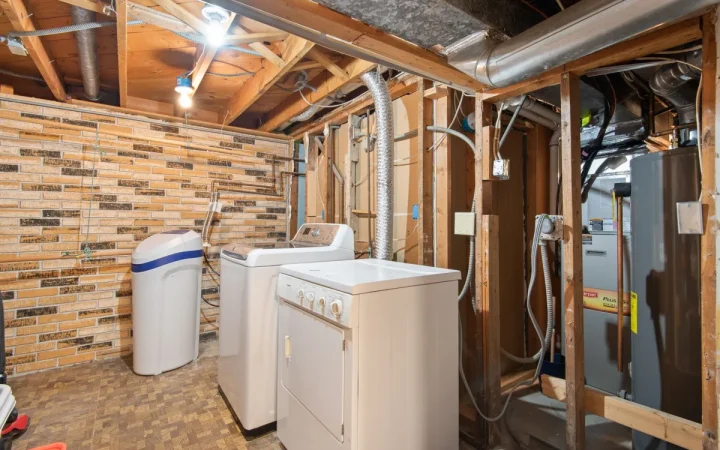

Most folks size a generator by walking through the house and adding up the numbers printed on the back of everything. It feels responsible. It’s also how you end up with a machine that’s either wheezing under load or twice as big as you’ll ever need.
The trouble is that a nameplate rating and what an appliance actually draws are two different animals. A refrigerator labeled 800 watts might idle at 150 and spike to 1,200 for a second when the compressor kicks on. If you don’t know which number to trust, you’re guessing.
I spent twelve years wiring and servicing backup power before I started writing about it, and I’ve watched this exact mistake play out in a lot of garages. So here’s the appliance wattage chart I actually use on jobs, plus how to read it without getting burned.
Key takeaways
- Running watts keep an appliance going; starting watts are the brief surge when motors spin up. Both matter, but they don’t add the same way.
- Only anything with a motor or compressor has a real starting surge. Lights, TVs, and chargers don’t.
- Add your running watts, then add the single largest starting surge on top. That’s your realistic peak.
- Most homes ride out an outage comfortably on 5,000 to 7,500 running watts if they’re picky about what runs at once.
How to read an appliance wattage chart without getting fooled
Every appliance wattage chart you’ll find, including mine, lists two figures: running watts and starting watts. Get these straight and the rest is arithmetic.
Running watts are the steady draw once something is up and going. Starting watts, sometimes called surge or locked-rotor watts, are the extra jolt a motor needs for a half-second to get moving. A window AC might run at 1,000 watts but demand 2,200 for the instant its compressor starts.
Here’s the part people miss. You do not add up every starting watt in the house. Your fridge and your well pump won’t both happen to surge at the exact same instant, and even if they did, you’d size for that once. The honest math is all your running watts plus the biggest single surge among them. If that distinction is fuzzy, the piece on running watts vs starting watts, explained lays it out slower than I can here.
Anything that heats or spins hard, meaning a fridge, AC, well pump, furnace blower, or sump pump, has a real starting surge. Resistive stuff like a toaster, coffee maker, or LED bulb pulls the same watts starting as running. Don’t pad numbers for gadgets that don’t surge.

The chart: what common appliances actually pull
These are typical numbers for residential gear. Yours will vary a little, so treat this as a starting point and check your own nameplates where you can. When a range shows up, the bigger figure is usually the older or larger unit.
| Appliance | Running watts | Starting watts |
|---|---|---|
| Refrigerator / freezer | 150–400 | 800–1,200 |
| Chest freezer (standalone) | 100–350 | 600–1,000 |
| Furnace blower (1/2 hp, gas) | 600–900 | 1,400–2,300 |
| Central AC (3 ton) | 3,500–4,000 | 5,000–8,000 |
| Window AC (10,000 BTU) | 900–1,200 | 2,000–2,500 |
| Well pump (1/2 hp) | 1,000 | 2,000–3,000 |
| Sump pump (1/3 hp) | 800 | 1,300–2,100 |
| Space heater | 1,500 | 1,500 |
| Microwave | 1,000–1,500 | 1,000–1,500 |
| Coffee maker | 800–1,200 | 800–1,200 |
| Electric water heater | 4,000–4,500 | 4,000–4,500 |
| Lights (whole house, LED) | 150–400 | 150–400 |
| TV + internet router | 150–300 | 150–300 |
| Laptop / phone charging | 50–150 | 50–150 |
Where the surprises hide
Well pumps and central AC are the two loads that wreck more sizing plans than anything else. That well pump pulling a 3,000-watt surge is the reason a 3,500-watt generator that seemed plenty on paper stalls the moment someone flushes a toilet.
Electric water heaters and electric ranges are the other trap. They’re not motor loads, so no surge, but they’re thirsty enough at 4,000-plus watts that running one basically eats a small generator by itself. On a job last winter I told a couple in a farmhouse to just skip the electric water heater during outages and heat a kettle. Saved them from buying a machine twice the size.
Doing the math with a real example
Say you want to keep the essentials alive during a winter outage: fridge, gas furnace blower, some lights, the well pump, and a few phones charging. Let’s total it.
- Refrigerator: 300 running watts
- Furnace blower: 800 running watts
- Well pump: 1,000 running watts
- Lights and electronics: 500 running watts
- Running total: 2,600 watts
Now add the single biggest surge. The well pump’s 2,500-watt starting spike is the largest here, and it stacks on top of everything else already running. So 2,600 plus roughly 2,000 of extra surge headroom lands you near 4,600 watts at the peak instant.
A 5,000-watt generator handles that with a little room to spare. A 7,500-watt unit gives you comfort to add the microwave later. This is exactly the walkthrough covered in a simple generator sizing calculator walkthrough if you’d rather plug numbers into a tool than do it by hand.
Never run a portable generator indoors, in a garage, or near open windows. Carbon monoxide from one unit can kill in minutes. Keep it at least 20 feet from the house with the exhaust pointed away. The CPSC has clear guidance on this at cpsc.gov.
Why bigger isn’t the safe bet
People assume padding the number is harmless insurance. It isn’t. An oversized generator loafing at 20 percent load burns more fuel per watt, wet-stacks its engine over time, and costs you hundreds more up front for capacity you never touch.
A generator runs cleanest and most efficiently loaded to somewhere between 50 and 80 percent. I’ve walked into more than one garage with a 12,000-watt unit powering a fridge and a couple lamps, which is a waste on every front. The full case is in why oversizing a generator is a costly mistake, and it’s worth a read before you spend.
If you’re leaning toward a permanent installation that powers the whole house automatically, the picture changes. Those are sized differently, and both whole-house standby generators and the transfer switch that connects them deserve their own conversation with a licensed installer. The U.S. Department of Energy also keeps solid, plain-language notes on home energy use at energy.gov.
Your next move
Grab a notepad and walk the house once. Write down what genuinely has to run during an outage, pull the running watts for each from the chart above, add them up, then tack on the single largest surge. That number, not the nameplate guesswork, is what you shop against.
If you want the whole method start to finish with a worksheet, my full breakdown on how to size a generator for your home takes you the rest of the way. Do the math once and you’ll buy the right machine the first time, which beats returning a too-small one in the middle of a storm.