The call I dread most in summer starts the same way every time. “Marcus, the generator runs the fridge and the lights fine, but the second the AC kicks on, the whole thing bogs down and dies.” Nine times out of ten, the unit is sized for what the air conditioner usesnot what it takes to start.
Central air is the meanest load in most houses. A compressor motor can pull five to seven times its running current for a half-second at startup, and that spike is what trips a generator that looked plenty big on paper.
So let’s figure out the honest number. I’ll walk you through how the pros read the nameplate, how to pick the right generator size for air conditioner startup, and where people waste money going too big.
Key takeaways
- Size for the compressor’s starting watts, not just running watts, the surge is usually 2.5x to 3x higher.
- A 3-ton AC (about 3,500 running watts) can spike to 10,000+ watts for a fraction of a second on startup.
- A “soft start” kit cuts that surge dramatically and can let a smaller generator handle a big AC.
- Add your AC load on top of the rest of the house, then add 20% headroom before you buy.
Why the generator size for air conditioner startup is the number that matters
Your AC has two loads. The running load is steady and easy, that’s the wattage it sips once the compressor is spinning. The starting load, also called Locked Rotor Amps or LRA, is the brutal half-second when the compressor motor breaks free from a dead stop.
On a job last July in a 2,400 sq ft ranch, the homeowner’s 3-ton unit ran at about 3,400 watts all day long. Fine. But the LRA on the nameplate translated to roughly 10,500 watts of instantaneous demand. His 5,500-watt portable never had a chance.
Generators are rated two ways for exactly this reason: a running (or rated) wattage they hold all day, and a surge (or peak) wattage they can supply for a second or two. You need the surge rating to clear that compressor spike.
Reading the nameplate without a degree
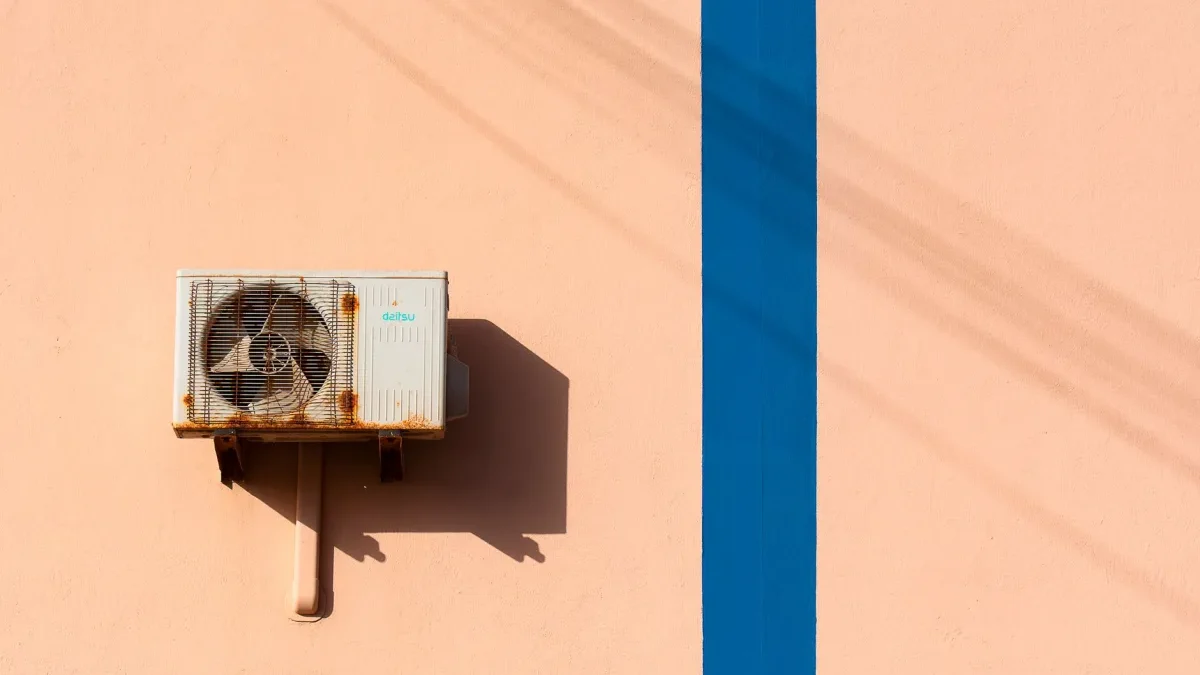
Walk out to the condenser, the big box outside, and find the metal data plate. You’re hunting for two numbers: RLA (Rated Load Amps, the running draw) and LRA (Locked Rotor Amps, the startup surge).
Multiply amps by 240 volts to get watts. If RLA is 15, that’s about 3,600 running watts. If LRA reads 45, you’re looking at roughly 10,800 watts at the moment of startup. That LRA figure is the one that sinks undersized generators.

Ballpark numbers by AC size
Nameplates vary by brand and age, so treat this table as a starting point, not gospel. Older units and cheap builder-grade compressors tend to run higher on both columns.
| AC size (tons) | Running watts (approx.) | Startup surge (approx.) |
|---|---|---|
| 2 ton | 2,000 – 2,500 W | 6,000 – 7,500 W |
| 3 ton | 3,000 – 3,800 W | 9,000 – 11,000 W |
| 4 ton | 4,000 – 4,800 W | 12,000 – 15,000 W |
| 5 ton | 4,800 – 5,800 W | 15,000 – 18,000 W |
One ton equals 12,000 BTU of cooling. If you don’t know your tonnage, the model number on the condenser usually hides it, look for a two-digit number like 24, 36, 48, or 60, which is BTU in thousands. So “036” means 3 tons.
Don’t forget the rest of the house
The AC never runs alone. Your fridge, well pump, sump pump, a few lights, and the furnace blower (yes, the blower runs during cooling season too) all draw at the same time.
A realistic beginner approach is to add up everything you truly need, then stack the AC’s surge on top of the highest single starting load. Here’s the checklist I hand people before they shop.
- Central AC running watts (from the nameplate)
- Furnace / air handler blower, usually 500 to 800 W
- Refrigerator, about 150 W running, 800 W to start
- Well or sump pump if you have one, 1,000 to 2,400 W running, much more to start
- Lights, TV, phone chargers, Wi-Fi router, a few hundred watts total
- The single largest startup surge (almost always the AC)
If you’re piecing together the whole picture, my walkthrough on how to size a generator for your home shows how to build the full load list room by room. And if you’re on a well, the numbers stack up fast, see sizing a generator for a well pump before you settle on a model.
Never run a generator in a garage, shed, or near an open window. Carbon monoxide from a single portable unit can be fatal within minutes. Keep it at least 20 feet from the house with the exhaust pointed away. The CPSC logs dozens of preventable deaths every storm season for exactly this reason.
The soft start trick that saves you money
Here’s the move most homeowners never hear about. A soft start kit, a small device wired into the condenser, ramps the compressor up gradually instead of slamming it on. It can knock that startup surge down by 50% to 70%.
I installed one on a 4-ton unit last spring for a customer who wanted to run his AC off a 7,000-watt inverter generator. Without it, no chance. With the kit, the surge dropped from roughly 13,000 watts to under 5,000, and that little generator handled it clean.
The kit runs about $250 to $400 installed. Compare that to jumping up two generator sizes, which can easily cost $1,500 more, and the math usually favors the soft start.
If you’re buying a new AC anyway, ask for a variable-speed (inverter) compressor. Those units sip power and barely surge at all, which shrinks the generator you need. Manufacturers publish the exact startup data, Generac’s sizing resources at generac.com are a solid cross-check.
Portable vs. standby: which fits your AC
A portable generator in the 7,500 to 9,000 running-watt range, paired with a soft start kit, will comfortably run a 3-ton AC plus the essentials. That’s the sweet spot for most single-AC homes on a budget.
If you’ve got a 4- or 5-ton system, or two AC units, you’re realistically in standby territory, a permanently installed 14kW to 22kW unit that starts itself. I break down that whole category in the complete guide to whole-house standby generators.
Either way, you cannot back-feed a generator into your house safely without a transfer switch. That’s not optional, it protects utility crews and your own wiring. For gas-heat homes, my notes on what size generator runs a furnace pair well with your AC math for year-round coverage.
A mistake I see all the time
People buy for the running number, get spooked by one stall, then overcorrect and buy a monster 22kW unit for a 1,600 sq ft house with one 2.5-ton AC. Now they’re burning extra fuel and paid for capacity they’ll never touch.
The right-sized answer is usually boring and in the middle. Get your surge number honestly, add 20% headroom, and stop there.
Your next move this week
Go outside today and write down the RLA and LRA off your condenser nameplate. Those two numbers turn all of this from guesswork into a shopping list you can hand a salesperson with confidence.
Then list the three or four things you actually need during an outage and add the AC surge on top. If a soft start kit gets you into a smaller, cheaper generator, take it, I’ve yet to meet a customer who regretted one. For the official word on safe generator use during outages, keep ready.gov’s power outage guidance handy before the next storm rolls in.