It never fails. The power goes out, the neighborhood goes dark, and the one machine you bought for exactly this moment sits there dead. You yank the cord, you thumb the switch, and nothing happens.
I spent twelve years as a licensed electrician wiring and servicing backup power, and I can tell you most no-start calls come down to five or six ordinary things. Rarely is it a blown engine. Usually it’s fuel that went bad in the tank, a safety switch doing its job, or a battery that quietly died back in April.
So before you load the thing into your truck and drive it to a shop, give me twenty minutes. We’ll go part by part, in the order I’d check them on a paid call.
Key takeaways
- Most no-start problems are fuel, oil level, or a dead battery, not the engine itself.
- Stale gas is the number one culprit; fuel older than 30 days can gum a carburetor.
- The low-oil sensor will silently block starting, and people miss it constantly.
- Work in order, fuel, oil, choke, spark, battery, so you don’t chase the wrong problem.
Start with the obvious before you assume the worst
When a generator wont start, I always begin with the boring stuff, because the boring stuff is right about 70 percent of the time.
Is there fuel in the tank? Actually look, don’t trust the gauge. Is the fuel valve open? Is the run switch in the “on” or “run” position and not still set to “off” from last season?
On a job last winter, a guy in Ohio paid me a service call fee because his brand-new 7,500-watt unit “was defective.” The choke was open and the fuel valve was shut. Two flips and it fired on the first pull. He was embarrassed; I’ve done the same thing myself on a cold morning.
Never run a generator in a garage, shed, or anywhere near open windows. Carbon monoxide kills fast and silently, keep the unit at least 20 feet from the house with the exhaust pointed away. The CPSC ties hundreds of deaths a year to this exact mistake.
Bad fuel: the number one reason engines won’t fire
Gasoline does not age well. Left in a tank for more than about a month, it starts to break down and drop varnish into the carburetor, and that gum plugs the tiny jets the engine needs to draw fuel.
If your gas has been sitting since last hurricane season, that’s almost certainly your problem. Old fuel smells sour or like turpentine instead of that sharp fresh-gas snap.
What to do about stale gas
Drain the tank into an approved container and refill with fresh fuel. If it still won’t run after that, the carburetor bowl likely needs cleaning, pull the drain screw at the bottom and let the old varnish out, or remove the bowl and clean the main jet with carb spray.
- Fuel is less than 30 days old (or stabilizer was added)
- Fuel valve or petcock is fully open
- Fuel line has no kinks and the filter isn’t clogged
- Carburetor bowl has been drained of old gas
- Vent on the fuel cap is clear (loosen the cap and try again)
Going forward, add a fuel stabilizer to every tank, or run the carburetor dry before you store the machine. A four-dollar bottle of stabilizer treats far more gas than one carb rebuild costs you. If you’re weighing propane or natural gas to sidestep this headache entirely, my rundown on how the common generator fuel types compare lays out the trade-offs.
Check the oil, the sensor that stops everything
Nearly every modern portable has a low-oil shutdown sensor. It’s a good feature; it saves engines. But it also means a unit that’s a half-quart low will crank and crank and never catch, with no warning light on most models.
Pull the dipstick and check. If the machine is sitting on uneven ground, say a sloped driveway, the sensor can read low even when the oil is fine, so level it out and check again.
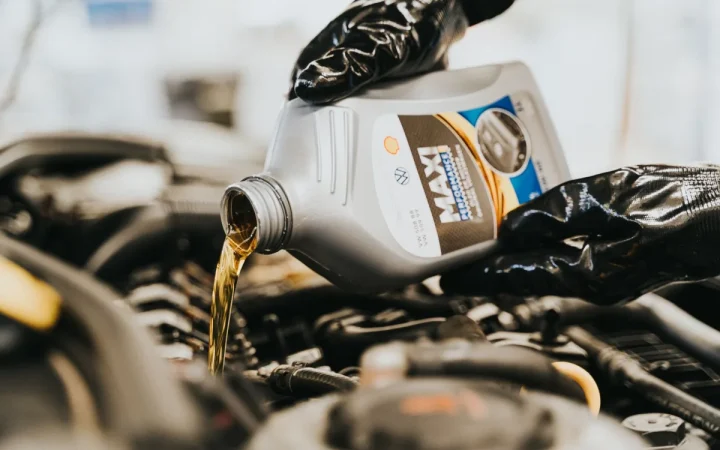
Top off oil to the full mark with the exact weight in your manual (usually SAE 30 above freezing, 5W-30 in the cold). Overfilling is just as bad, it can foul the plug and cause a no-start of its own.
Spark, choke, and air: the ignition trio
If fuel and oil check out, the engine has what it needs but isn’t lighting it. Three things live here.
The choke
A cold engine needs the choke closed to start, then opened once it warms. A warm engine flooded with a closed choke won’t fire either. Match the choke to the engine’s temperature, closed cold, open warm.
The spark plug
Plugs foul, gap out, and corrode. Pull it and look: a wet, black, or oil-caked tip tells the story. A clean tan-colored tip is what you want. Swapping one takes about ten minutes and costs three to eight dollars, my step-by-step on replacing a generator spark plug walks through the gap setting so you don’t guess.
The air filter
A filter packed with dust chokes the engine so it can’t pull enough air to run. I’ve seen mud-dauber nests build inside an intake over one summer. If yours looks gray and matted, clean or replace it, here’s how to clean a generator air filter without wrecking the foam.
Batteries and starters on electric-start units
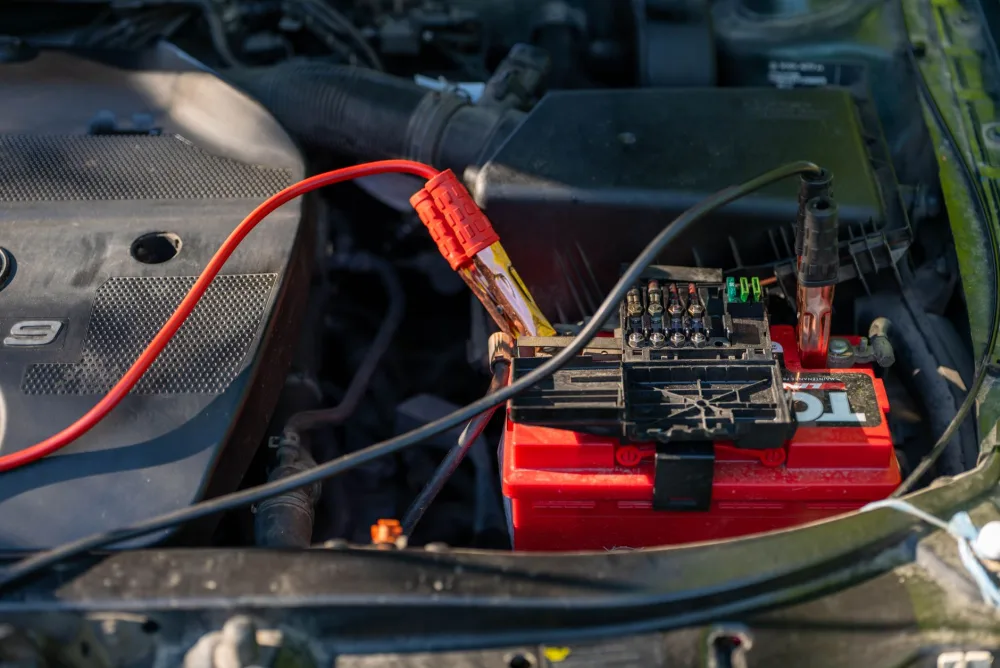
If your generator has a key or push-button start and all you get is a click, or nothing, suspect the battery first. These small 12-volt batteries self-discharge over months of sitting and often die within two to three years.
A no-crank click is classic low battery. Put a charger or a set of jumper leads on it and try again; if it spins right up, you found it. A battery that won’t hold a charge after a full night on the charger needs replacing, and a decent one runs about 30 to 60 dollars.
For a standby unit hardwired to the house, the fix might not be the generator at all, it could be the automatic transfer switch failing to send the start signal. My guide on how transfer switches actually work covers what to check before you condemn the engine.
A quick symptom-to-cause table
| What you see | Most likely cause | First move |
|---|---|---|
| Cranks but won’t catch | Stale fuel or closed valve | Fresh gas, open valve, drain carb |
| Won’t crank, no click | Dead battery / bad switch | Charge or jump the battery |
| Clicks once, no crank | Weak battery or starter | Charge battery, check connections |
| Starts then dies fast | Choke or clogged carb jet | Adjust choke, clean main jet |
| Cranks fine, no spark | Fouled plug or low oil sensor | Check oil level, inspect plug |
When to stop wrenching and call a pro
Most no-starts you can solve in your driveway with a screwdriver and a fresh gallon of gas. But there are lines worth respecting.
If you smell fuel pooling, see damaged wiring, or the engine makes a hard metallic knock, stop and get a technician. Anything involving the hardwired connection between a standby unit and your panel is licensed-electrician territory, that’s not a place to experiment.
Your best defense is that none of this happens on the night you need power. Run the machine under load for 20 minutes once a month, keep fresh fuel in it, and follow a real generator maintenance checklist so small problems surface on a sunny Saturday instead of during the storm. If you own a standby unit, my notes on how often to service a standby generator will keep you on schedule.
Start fresh gas, check the oil, look at the plug, in that order, and you’ll fix the vast majority of these yourself. For the official word on running one safely, the CPSC’s portable generator safety page and Ready.gov’s power outage guidance are both worth a read before the next outage.