Every fall I get the same phone call. A homeowner fires up the generator they haven’t touched since the last storm, it sputters, coughs, and dies. Nine times out of ten the problem isn’t the machine. It’s the gas that’s been sitting in a can behind the lawnmower since spring, slowly turning into varnish.
I spent twelve years as a licensed electrician wiring and servicing backup power, and fuel is the part people get wrong most often. Not because it’s complicated, but because nobody tells them the basics. A five-gallon can of gas isn’t a battery you can leave on a shelf and forget.
So let’s walk through how to keep fuel ready to burn when you actually need it, without turning your garage into a hazard.
Key takeaways
- Use only red, sealed, approved gas cans and keep total storage under your local limit (often 25 gallons for a home).
- Untreated gasoline starts degrading in 30 days; with stabilizer it can last a year or more.
- Store cans in a detached shed or garage away from any ignition source, never inside the living space.
- Rotate your supply so the oldest fuel gets burned first and nothing sits past its useful life.
Why storing gasoline for a generator goes wrong so fast
Gasoline is a blend of light hydrocarbons, and the lightest ones evaporate first. As they leave, the fuel gets heavier and less willing to ignite. That’s the “stale gas” smell you notice on an old mower.
Modern pump gas makes this worse. Most stations sell E10, which is 10 percent ethanol, and ethanol pulls moisture straight out of the air. Give it a few weeks in a vented can and you can end up with water sitting at the bottom of your fuel, which is exactly what a carburetor hates.
On a job last winter I pulled a float bowl off a two-year-old portable and found a crusty amber film coating everything. That homeowner had good gas when he bought it. He just never rotated it. The repair ran him about $140, and it was completely avoidable.
Pick the right container, not the cheapest one
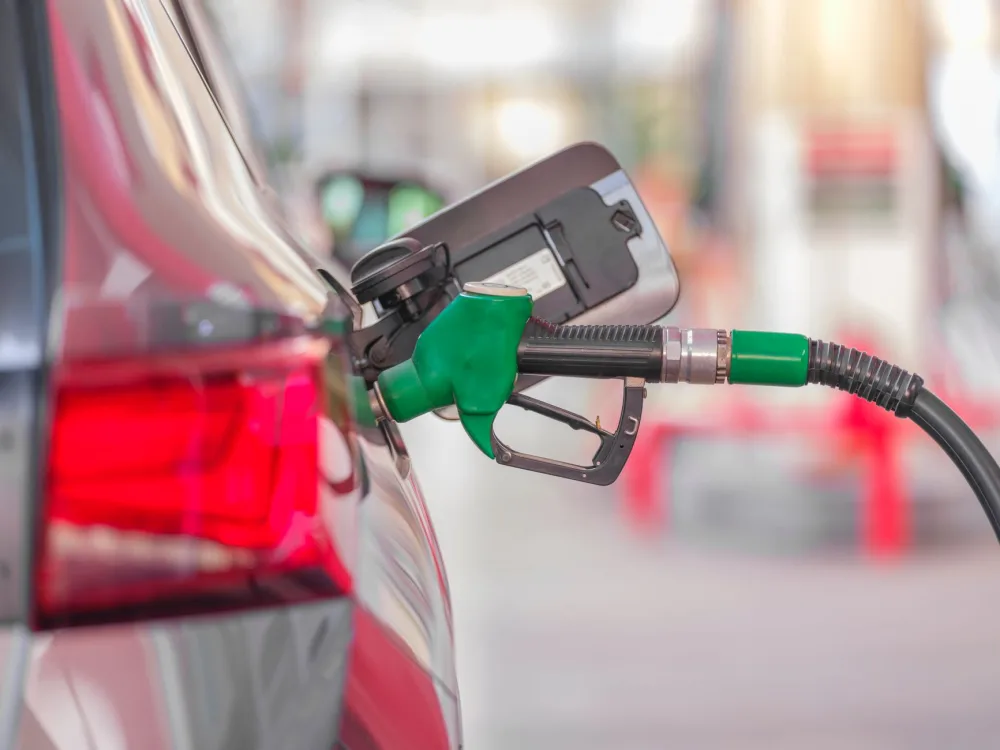
The can matters more than people think. A proper fuel container seals vapor in, resists impact, and has a spout designed not to spill all over your hands.
What to look for
- A red container rated for gasoline and stamped as meeting ASTM or UL/CSA standards.
- A self-venting or spill-proof spout so you’re not glugging fuel everywhere.
- A tight-sealing cap, checked every season for cracks or a dried-out gasket.
- Five gallons or less per can; a full five-gallon can already weighs about 30 pounds.
Skip the old metal safety cans from a garage sale unless you know the seal is good. And never store gas in a milk jug or a random plastic bottle. I’ve seen it, and it’s a leak and a fire waiting to happen.
Never fill a can while it sits in your truck bed or on a plastic liner. Static can build up and ignite the vapor. Set the can on the ground, keep the nozzle touching the rim, and fill slowly. The CPSC and NFPA both flag static as a real cause of gas-can fires.
How much gas should you actually keep?
This is where beginners either store way too little or way too much. A mid-size portable running a fridge, some lights, and a well pump burns roughly 12 to 18 gallons a day at half load. A typical outage in most regions runs a day or two.
For most homes I suggest keeping 15 to 25 gallons on hand. That covers a normal outage with a little buffer, and it stays under the 25-gallon residential limit many local fire codes set. Check your own municipality, because some cap it lower.
If you find yourself wanting to store 40 or 50 gallons, that’s a sign gasoline may be the wrong fuel for you. Propane stores indefinitely and doesn’t go stale, which is why a lot of my clients switch. It’s worth reading how the common generator fuel types compare before you commit to a big gas stockpile, and if you lean propane, sizing the tank correctly matters just as much.
| Storage condition | Realistic usable life |
|---|---|
| Untreated E10 in a vented can | About 30 days |
| Untreated gas, sealed can, cool spot | 2 to 3 months |
| Gas with fuel stabilizer added fresh | 12 months, sometimes longer |
| Ethanol-free gas with stabilizer | Up to 24 months |
Stabilizer and rotation: the two habits that save your fuel
A fuel stabilizer is a cheap additive, usually under $10 a bottle, that slows oxidation and helps hold the light components in the blend. One ounce treats around 2.5 gallons with most brands, so read the label.
The catch is timing. Stabilizer works when you add it to fresh gas, not to fuel that’s already six months old and cloudy. Pour it in the day you fill the can, then swirl it. I keep a bottle on the shelf right next to my cans so I never forget. If you want the full rundown on dosing and shelf life, our piece on what to know about fuel stabilizer covers it well.
Rotation is the other half. Label each can with the fill date in permanent marker. Every couple of months, pour the oldest can into your car’s tank and refill it fresh. Your vehicle burns it off harmlessly, and your emergency supply never ages out.
Buy ethanol-free gas if a station near you sells it. It costs a bit more per gallon but stores far longer and won’t pull water like E10 does. Small-engine shops often stock it in cans too.
Where to keep the cans so nobody gets hurt
Location is the part I’m most strict about with clients, because this is the piece that can burn a house down.
Store gasoline in a detached shed or an unattached garage whenever you can. Keep it away from anything with a pilot light or a spark: water heaters, furnaces, the dryer, any electric motor. Vapor is heavier than air, so it creeps along the floor and finds ignition sources you’d never expect.
Never store gas inside the house, in a basement, or near a bedroom. And keep it off direct sun and out of a hot metal shed in July, since heat drives evaporation and builds pressure inside the can. A shaded spot between 40 and 80 degrees is ideal. Ready.gov and your local fire marshal both back this up.
Refuel a generator only when it’s off and cool, never while it’s running or hot. Spilled gas on a hot muffler ignites instantly. Shut it down, wait ten minutes, then top it off outside and well away from the exhaust.
Your next-weekend fuel checkup
You don’t need to overhaul anything today. Grab a Saturday morning, walk out to wherever your cans live, and run through a short check: are they approved red cans, sealed tight, dated, treated with stabilizer, and stored away from ignition sources?
If any answer is no, fix that one thing. Then set a reminder to rotate the fuel every couple of months, and fold it into your broader routine using our complete generator maintenance checklist. If you’re still shopping for the machine itself, our beginner guide to portable generators pairs well with all of this. Do those small things and the next time the power drops, your generator starts on the first pull.