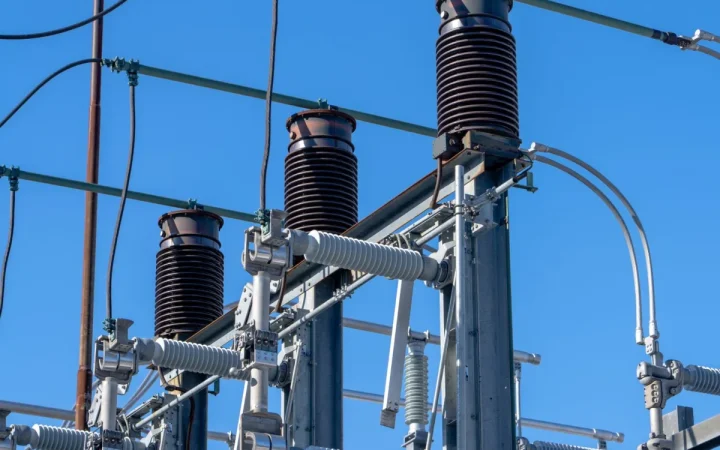
Last winter I got a call from a homeowner in Ohio who was proud as could be. He’d bought a 9,000-watt generator, run a cord to a box on the wall, and flipped a switch when the power went out. His lights came on. Then his neighbor’s porch light came on too, because his generator was quietly back-feeding the utility lines that a lineman three streets over was working on bare-handed.
The box he’d installed was a service disconnect, not a transfer switch. He thought they did the same job. They do not, and that gap in understanding could have killed somebody.
I spent twelve years pulling wire and installing backup power before I started writing here, and this mix-up is one of the most common ones I run into. Let me lay out the difference in plain terms so you buy the right thing the first time.
Key takeaways
- A service disconnect cuts your whole house off from the grid; it does not connect a generator or prevent back-feeding.
- A transfer switch chooses between two power sources (grid or generator) and physically blocks them from ever touching.
- Most homes need both, and on many newer installs the disconnect is already built into the meter or panel.
- Using a plain disconnect as a generator hookup is dangerous and illegal in every U.S. jurisdiction I know of.
Service disconnect vs transfer switch: what each one actually does
Here’s the fastest way I know to keep these straight. A service disconnect answers one question: is my house connected to the utility, yes or no? A transfer switch answers a different question: which source is feeding my circuits right now, the grid or the generator?
The disconnect is a single on/off gate between the power company and your panel. Utilities require one so a lineman can kill power to your home from the outside. It has no idea a generator exists.
A transfer switch has three states, not two: utility, generator, or off. Its whole reason for being is that it will never let both sources connect at once. That “never both at once” part is the safety feature that the Ohio homeowner was missing.
Why the overlap confuses people
Both are gray metal boxes with a handle. Both get mounted near your panel. Some transfer switches even include a disconnect function, which blurs the line further. But a disconnect alone can’t switch between sources, and that’s the job that matters when the grid goes dark.

The service disconnect, in more detail
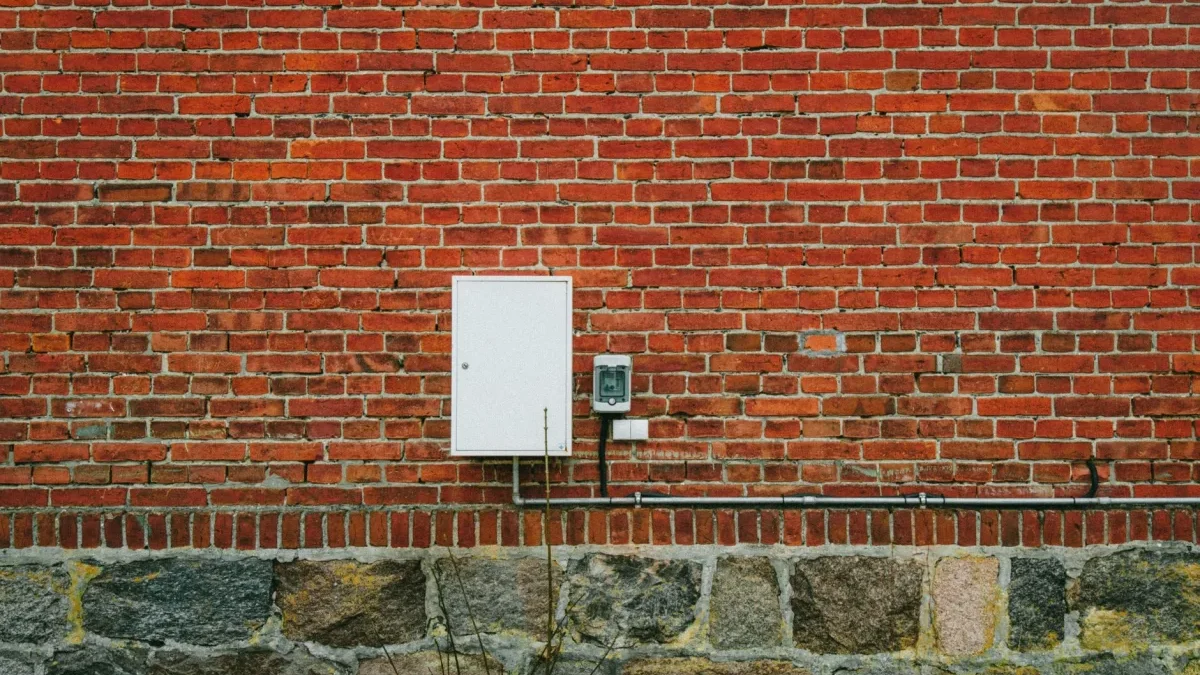
Since 2020, the National Electrical Code has required an emergency disconnect on the outside of most new one- and two-family homes. If your house was built or re-serviced recently, you may already have one right at the meter, labeled “EMERGENCY DISCONNECT.”
It’s a simple device. Rated for your service size (usually 100, 150, or 200 amps), it breaks both hot legs coming in from the utility. Flip it and the whole house goes dark, grid and all.
Firefighters love it. A homeowner running a generator gets nothing useful from it on its own.
A service disconnect does not stop your generator from back-feeding the grid. If you connect a generator through anything that lets both the utility and the generator touch the same wires, you can electrocute a utility worker and destroy your generator when power returns. This is the single most dangerous mistake I see in home backup setups.
The transfer switch, in more detail
A transfer switch sits between your generator, your utility feed, and the circuits you want to keep alive. Its mechanical design makes it impossible for grid power and generator power to meet. That’s called being “break-before-make,” and it’s the entire point.
You’ll run into two broad types, and I’ve written a fuller breakdown in our complete guide to transfer switches if you want the deep version.
Manual transfer switches
You flip these by hand. When the power dies, you start your generator, walk to the switch, and move the handle from “line” to “generator.” A basic manual switch for six to ten circuits runs about $300 to $600 in parts, plus a few hours of an electrician’s time.
Manual switches are honest, cheap, and reliable. The trade-off is that you have to be home and awake to use one.
Automatic transfer switches
An automatic transfer switch (ATS) watches the grid. When it sees an outage, it starts a standby generator, transfers the load, and switches back when utility power steadies, all without you lifting a finger. Expect $500 to $2,000 for the switch itself, more for whole-home units.
If you travel, run a sump pump, or have medical equipment, the automatic version earns its keep. Our piece on manual versus automatic transfer switches walks through which fits which household.
Side by side
| Feature | Service disconnect | Transfer switch |
|---|---|---|
| Main job | Cut the house off from the grid | Choose grid or generator |
| Connects a generator? | No | Yes |
| Prevents back-feed? | No | Yes |
| Required by code | Often, on newer homes | Yes, for any permanent generator |
| Typical parts cost | $60 to $200 | $300 to $2,000 |
Do you need one, the other, or both?
Nearly every home with backup power ends up with both, and that surprises people. The disconnect handles the utility side; the transfer switch handles the generator side. They solve different problems and don’t replace each other.
A quick way to check where you stand:
- Look at your meter. A box labeled “emergency disconnect” means the utility side is handled.
- Look near your main panel for a separate switch wired to a generator inlet. No inlet means you have no legal generator hookup yet.
- If you only have a disconnect and a plan to plug in a generator, stop. You need a transfer switch or an interlock before you do anything.
On a tight budget, there’s a middle path I like for many houses: a generator interlock kit. It’s a small mechanical slide that bolts onto your existing panel and makes it physically impossible to have the main breaker and the generator breaker on at the same time. Done right and permitted, it does the transfer-switch job for a fraction of the cost.
Before you buy any hookup, size your generator to the loads you actually want to run. I’ve watched folks spend $800 on a switch and then discover their generator can’t carry the well pump and the furnace together. Our guide on how to size a generator for your home keeps you from that gut-punch.
What a proper install looks like
On a typical job, the utility feed comes into the meter, hits the service disconnect, then runs to your main panel. The transfer switch (or interlock) taps in at the panel and ties to a weatherproof generator inlet on an outside wall.
The generator plugs into that inlet with a heavy cord. You never run a cord through a window into a power strip, and you never wire a male-to-male “suicide cord” into a dryer outlet. I’ve seen the burn scars those cause.
Permitting and an inspection are not optional here, and honestly they’re cheap insurance. If you want a realistic budget before you call anyone, the numbers in our transfer switch installation cost and process rundown are current and unvarnished. The U.S. Consumer Product Safety Commission also publishes plain-language portable generator safety guidance worth reading before your first outage, and the NFPA’s generator safety page covers carbon-monoxide placement rules people routinely ignore.
Your move before the next outage
Walk outside this weekend and read the labels on the boxes by your meter. Ten minutes tells you whether you have a disconnect, a transfer switch, both, or neither, and that answer decides what you buy next.
If you already have a hookup, don’t let it rot. Give it a test run under load and check the connections, using our generator maintenance checklist as your guide. A switch that hasn’t moved in two years has a way of failing on the coldest night of the year, and I’d rather you find that out on a sunny Saturday than at 2 a.m. in a blizzard.