Pick up any portable generator and you’ll see two wattage numbers stamped on the box. One is bigger than the other, and nobody at the store ever explains why. That gap between them is where most sizing mistakes happen.
I spent twelve years wiring homes and installing backup power before I started writing here, and I’ve lost count of how many times a homeowner called me because their brand-new generator “wasn’t strong enough.” Nine times out of ten it was strong enough. They just didn’t understand the second number.
So let’s fix that, once and for all.
Key takeaways
- Running watts is what a device draws while it’s steadily on; starting watts is the short spike it needs to get moving.
- Only motor-driven gear (fridges, pumps, AC, power tools) has a real starting surge, heaters and lights don’t.
- Size your generator to its running total plus the single largest starting surge, not every surge added together.
- Getting this wrong means a tripped generator on the coldest night, not a fire, but it’s still a miserable surprise.
Running watts vs starting watts: the short version
Running watts (sometimes called rated or continuous watts) is the power a device uses once it’s already running. A refrigerator that draws 700 running watts will sip roughly that much all day long while the compressor cycles.
Starting watts, also called surge or peak watts, is the extra jolt a motor needs in the first half-second it kicks on. That same fridge might spike to 2,100 watts for a fraction of a second before settling back down.
The spike is real, but it’s brief. Think of it like pushing a stalled car: the shove to get it rolling takes way more effort than keeping it moving once it’s going.
Why motors are the whole story here
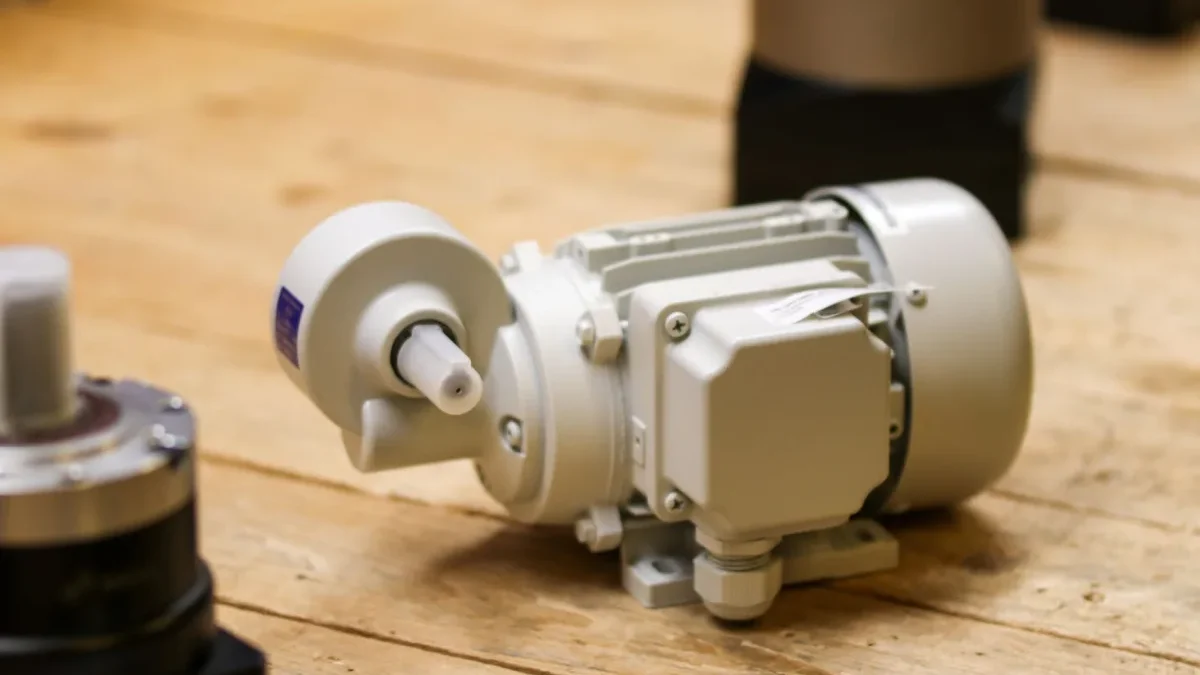
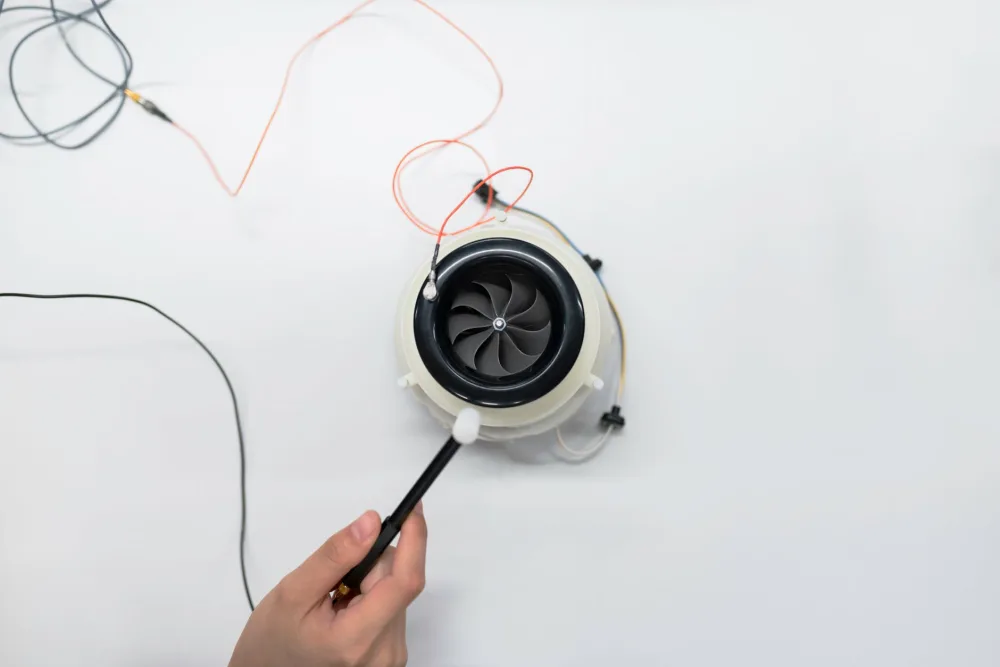
Here’s the part that clears up most confusion. Only things with an electric motor have a meaningful starting surge.
Anything that’s basically a heating element or a light bulb draws the same watts the instant it turns on as it does an hour later. A 1,500-watt space heater pulls 1,500 watts at second one and 1,500 watts at minute sixty. No surge, no drama.
What surges (and what doesn’t)
- Big surge: well pumps, sump pumps, air conditioners, refrigerators, freezers, furnace blowers, table saws
- No real surge: LED and incandescent lights, space heaters, toasters, coffee makers, phone chargers, TVs
On a job last winter, a client swore his 3,500-watt generator couldn’t handle “just a few lights and a fridge.” Turned out he was also firing up a 1,100-watt microwave and a 1,500-watt space heater at the same moment the fridge compressor kicked on. Everything piled onto that one instant, and the unit protected itself by shutting down. We staggered the loads and it ran fine for the rest of the outage.
How the two numbers actually add up
This is the rule that keeps you out of trouble, and it surprises people: you do not add every starting surge together.
Motors almost never start at the exact same instant. So the honest way to size a generator is to add up all the running watts, then add just the one biggest starting surge on top. That single worst-case spike is the peak your generator has to survive.
Here’s a small example household on a generator during an outage.
| Device | Running watts | Starting watts |
|---|---|---|
| Refrigerator | 700 | 2,100 |
| Sump pump (1/2 hp) | 1,050 | 2,150 |
| Furnace blower | 800 | 2,350 |
| LED lights (whole house) | 200 | 200 |
| Phone/laptop charging | 150 | 150 |
| Totals | 2,900 running | + 2,350 largest surge |
Add the 2,900 running watts to the single largest surge of 2,350, and your peak demand lands around 5,250 watts. A generator rated for 4,000 running / 5,500 starting watts covers this comfortably with a little headroom to spare.
Leave yourself about 20 percent of breathing room above your calculated peak. Generators lose output at high altitude and on hot days, and you’ll thank yourself the first time you plug in something you forgot to count.
Where the surge numbers come from
You’ve got three ways to find a device’s real numbers, and I’d trust them in this order.
First, check the nameplate or spec sheet. Most appliances list running watts or amps somewhere on a sticker or in the manual. To turn amps into watts, multiply amps by 120 (for standard household outlets).
Second, use a plug-in meter like a Kill A Watt on the things you can reach. It’s the only way to see a device’s actual draw in your home rather than a factory estimate.
Third, fall back on typical figures when you can’t measure. For fridges, freezers, and central air, the U.S. Department of Energy publishes real-world appliance consumption ranges you can sanity-check against at energy.gov. If you want the deeper walkthrough of adding it all up, our simple generator sizing calculator walkthrough takes you line by line, and the broader guide to sizing a generator for your home covers the whole picture.
The appliances people always underestimate
Two categories cause almost all the trouble. Refrigerators look tiny on paper but surge hard, which is why we wrote a whole piece on what size generator you need to run a refrigerator. And central air is in a league of its own.
A 3-ton central AC unit can surge past 12,000 watts for a heartbeat. If you’re planning to keep cooling during an outage, read up on sizing a generator for central air conditioning before you buy anything, because it changes the math completely.
Never run a portable generator indoors, in a garage, or near open windows. Carbon monoxide from the exhaust kills fast and gives no warning. Keep it at least 20 feet from the house with the exhaust pointed away, per CPSC guidance.
Undersizing vs. oversizing, honestly
An undersized generator won’t blow up. What happens is the surge exceeds its peak rating, the overload protection trips, and everything goes dark until you reset it and cut some load. Annoying, and it always seems to happen at 2 a.m.
Oversizing has a cost too. A generator loafing along at 20 percent load burns more fuel per usable watt, and gas engines don’t love running lightly loaded for days on end. Buying way more machine than you need wastes money up front and at the pump.
The sweet spot is a unit whose starting-watt rating clears your worst-case peak by a comfortable margin, without doubling it for no reason.
Your next move
Grab a notepad and walk your house. Write down the running watts for everything you’d genuinely want during an outage, then circle the single item with the biggest starting surge. Add the running total to that one surge, tack on 20 percent, and you’ve got your target starting-watt number.
If your list points you toward keeping the whole house on automatically instead of dragging out extension cords, that’s a different animal worth understanding, so read our complete guide to whole-house standby generators and how transfer switches work before you spend a dime. Get the two numbers right, and the rest of the decision gets a whole lot easier.