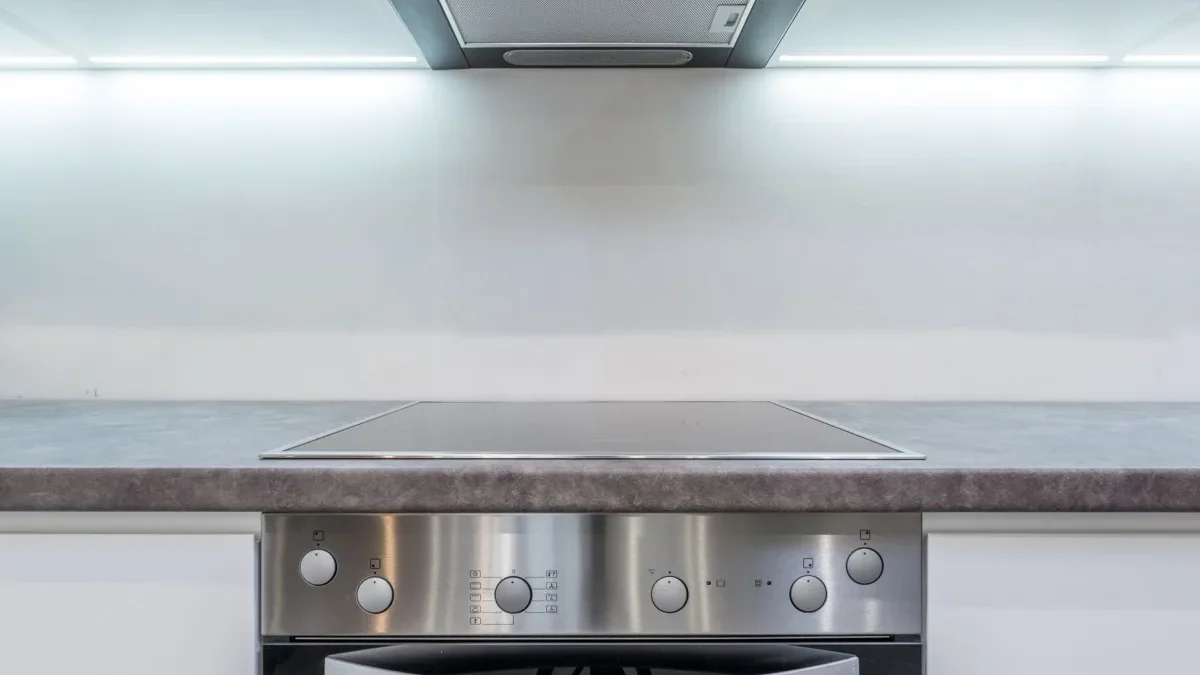
An electric range is one of the hungriest appliances in a typical house. On a job last winter in a farmhouse outside Rochester, the owner had bought a 5,000-watt portable to “run the essentials” during outages, and he was baffled that his oven kept killing the generator the second he turned on a second burner. Nobody had told him that his cooktop and oven together could ask for close to 8,000 watts.
That’s the whole problem in a nutshell. People size a generator around the fridge and a few lights, then forget the stove is quietly the biggest single load in the kitchen. Cooking during an outage is doable, but only if you understand what those coils and elements actually draw.
So let’s walk through the real numbers, the honest trade-offs, and how to land on a generator that cooks dinner without leaving you in the dark.
Key takeaways
- A full-size electric range can draw 8,000 to 12,000 watts at full tilt, more than most portable generators put out.
- You rarely use every element at once, so smart cooking habits let a 7,500 to 10,000-watt unit handle a stove plus basics.
- Most electric ranges need a 240-volt supply and a proper transfer switch, not an extension cord.
Why a generator for an electric stove is trickier than it looks
Gas cooktops sip power. An electric range does not. Every heating element turns electricity straight into heat, and heat is expensive in watt terms.
A single large surface burner on high can pull 2,000 to 3,000 watts. The oven’s baking element runs another 3,000 to 5,000 watts while it heats up. Add the broiler, a couple of small burners, and the range’s own controls, and a full-size unit can peak past 12,000 watts.
Here’s the part that catches beginners: a range is almost always a 240-volt appliance. That means you can’t just run a cord from a portable generator’s household outlet. You need a 240-volt output and a way to feed the range’s dedicated circuit safely, which nearly always means a transfer switch.
Never backfeed a range circuit by plugging a generator into an outlet or wiring around your panel. It can energize utility lines and kill a lineman. If you want the range fed during an outage, have an electrician install a proper transfer switch.
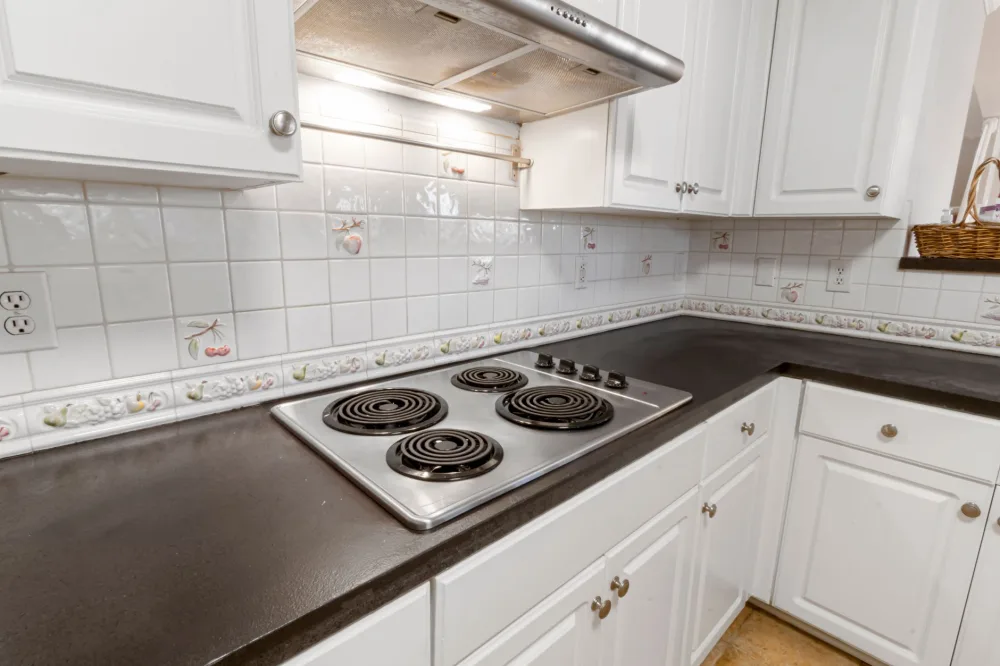
Know your range’s real numbers before you shop
Before you price a single generator, find out what your specific range actually draws. Two ovens that look identical can be wired for very different loads.
Check the nameplate and the breaker
Look at the metal data plate, usually behind the bottom drawer or on the back. It lists volts and either amps or kilowatts. A common electric range is wired to a 40-amp or 50-amp, 240-volt circuit.
Do the math: 40 amps times 240 volts is 9,600 watts of maximum capacity. A 50-amp circuit tops out around 12,000 watts. That’s the ceiling, not your normal usage, but it tells you the worst case the wiring allows.
Separate “peak” from “what you’ll really use”
You almost never run the oven, broiler, and all four burners at full blast at the same instant. In practice, boiling water for pasta while the oven preheats might land you around 5,000 to 7,000 watts for a few minutes, then drop as elements cycle off.
A mistake I see all the time is buying for the theoretical maximum and paying for capacity that sits idle 99 percent of the time. You size for realistic simultaneous loads, then add a cushion.
What size generator do you actually need?
For most families who just want to cook a normal meal during an outage, a generator in the 7,500 to 10,000-watt running range hits the sweet spot. That covers a couple of burners, a preheating oven, and your fridge, with room to breathe.
If you insist on running the full range wide open alongside a well pump or air handler, you’re into 12,000-watt-plus territory, and honestly a standby unit starts making more sense than a portable.
| Cooking scenario | Rough running watts | Practical generator size |
|---|---|---|
| Two burners + fridge, no oven | 4,000 – 6,000 W | 7,500 W portable |
| Oven preheating + one burner | 5,000 – 7,000 W | 9,000 – 10,000 W |
| Full range + house essentials | 10,000 – 14,000 W | 14,000 W+ or standby |
If you’re already sizing for the whole house rather than just the kitchen, walk through the numbers in our guide on how to size a generator for your home. It stacks the range on top of everything else so you don’t undercount.
Cooking habits that shrink the generator you need
You can buy your way out of this with a bigger unit, or you can be a little smarter at the stove and save a thousand dollars. I’d rather you save the money.
- Preheat the oven first, then start burners once it’s up to temperature and cycling.
- Use one or two burners at a time instead of all four at once.
- Cook with lids on to hit temperature faster and let elements cycle off sooner.
- Keep a countertop induction burner or air fryer handy; they pull far less than the full range.
- Stagger your loads, so the fridge compressor and oven aren’t both surging at the exact same second.
A single 1,800-watt countertop induction burner can cook most meals during an outage and lets you drop down to a much smaller, cheaper generator. Plenty of my customers skip powering the big range entirely and never miss it.
Portable versus standby for feeding a range
A portable in the 9,000 to 10,000-watt class, paired with a transfer switch, runs around $1,500 to $2,500 plus install. It’ll cook and cover essentials, but you’re manually starting it and managing fuel.
An air-cooled standby that can comfortably carry a full range plus AC usually runs 18kW to 22kW and lands somewhere north of $5,000 installed. It starts itself and runs on natural gas or propane, which matters if outages in your area last days, not hours.
If you’re leaning that direction, our rundown of whole-house standby generators lays out the sizing and fuel math. And since the range must be fed through your panel, read up on how a transfer switch actually connects your circuits before you commit to anything.
Don’t forget the other appliances fighting for watts
The range never runs alone. Your refrigerator, freezer, and maybe a furnace blower are all pulling from the same generator, and their startup surges land at unpredictable moments.
A fridge only needs a modest amount on its own, as we cover in our breakdown of what size generator runs a refrigerator, but its compressor surge stacked on a preheating oven is exactly what trips an undersized unit. Central air is the other big one; if you plan to cool and cook at once, our notes on sizing for central air conditioning will keep you honest.
For a solid reference on generator safety and placement while you plan, the CPSC’s portable generator guidance is worth five minutes. The Ready.gov power outage page is another good starting point for outage planning.
Your next move before you buy anything
Start at the nameplate. Read your range’s volts and amps, decide honestly whether you’ll cook full meals or just heat a pot or two, and write down that realistic number.
Then match it to a generator with a 240-volt output and a cushion of a few thousand watts, and budget for a transfer switch install. If the arithmetic gets fuzzy, run your figures through our step-by-step sizing calculator walkthrough and let it check your work. Get that one number right and everything downstream, from fuel to wiring, falls into place.