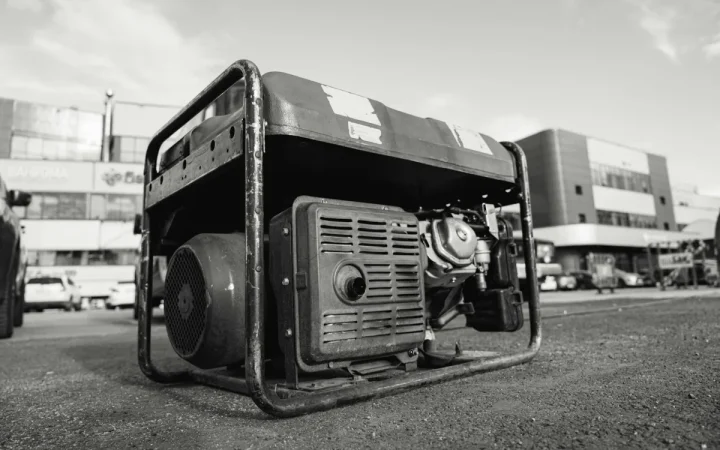

Most folks buy a generator the same way they buy a TV: bigger number, more confidence. Then the first outage hits, they plug in the fridge and a space heater, and the thing bogs down and quits. I’ve been called out to fix that exact scene more times than I can count.
The truth is a generator doesn’t care how many appliances you own. It cares about how many are pulling power at the same instant, and how hard some of them kick when they start. Get those two things right and a modest unit will carry your household through a storm with room to spare.
So let’s figure out what you actually need, using the same napkin math I’ve done on a hundred driveways.
Key takeaways
- Add up only the loads you’ll run at the same time, not everything you own.
- Motors (fridge, well pump, AC) need extra starting watts on top of running watts.
- Most homeowners are well covered by a 5,000 to 7,500 running-watt unit.
- Buy about 20 to 25 percent of headroom above your peak, then stop.
Running watts vs. starting watts, and why portable generator wattage confuses people
Every appliance has two numbers that matter. Running watts is what it draws once it’s humming along. Starting watts, sometimes called surge, is the brief spike a motor pulls at the moment it switches on.
A refrigerator is the classic example. It might run at 150 watts all day, but the compressor can demand 700 to 1,200 watts for a second or two when it kicks in. That spike is where undersized generators fall on their faces.
Portable generator wattage is almost always listed as two figures for this reason, like “6,500 starting / 5,000 running.” The running number is the one you live with. The starting number is your cushion for those motor spikes.
Only your largest motor’s surge matters at any given moment. Two fridges rarely start at the exact same instant, so you don’t stack every surge figure on top of each other.
Add up what you’ll actually run at once
Grab a pen. The goal here is one number: your peak simultaneous load during an outage.
Walk the house and be honest about what you’d genuinely use with the power out. You are not running the dishwasher, the dryer, and the oven at 8 p.m. during an ice storm. You’re running the essentials.
A typical outage load list
| Appliance | Running watts | Starting watts |
|---|---|---|
| Refrigerator | 150 | 1,200 |
| Chest freezer | 150 | 1,000 |
| Furnace blower (gas) | 600 | 1,300 |
| Sump or well pump (1/2 hp) | 1,000 | 2,100 |
| Lights (LED, several rooms) | 200 | 200 |
| Wi-Fi, phones, TV | 250 | 250 |
| Microwave | 1,000 | 1,000 |
Add the running watts of everything you’d run together. In the list above, if you skip the microwave for a minute, you’re around 2,350 running watts.
Now add the single biggest starting surge on top. The well pump’s extra 1,100 watts of surge (2,100 minus its 1,000 running) pushes your peak to roughly 3,450 watts. That’s your real target, not the sum of every surge column.
What size that math points to
For the household above, a 5,000 running-watt generator handles everything with breathing room, and you can still throw the microwave on for a few minutes between pump cycles.
Here’s the rough sizing I give people at the door:
- Fridge, freezer, lights, internet, phones: a 2,000 to 3,000-watt inverter unit does it.
- Add a furnace blower and a sump pump: step up to 4,000 to 5,000 running watts.
- Add a well pump and window AC: you want 6,500 to 7,500 running watts.
- Trying to run central air or an electric range: you’re into 9,000-plus, and honestly into standby territory.
That last line matters. Once people want central air and the whole kitchen, a portable stops being the right tool. That’s the point where I steer them toward a permanently installed standby generator instead of a bigger and bigger portable they have to babysit.
Don’t oversize just because you can
Buying way more generator than you need isn’t the safe bet people think it is. A big unit burns more fuel at idle, costs more up front, and weighs more to drag around.
On a job last winter, a fellow had bought a 12,000-watt beast to run a fridge and a few lights. It sipped gas like a truck and he was refilling it twice a day. A 3,500-watt inverter would’ve run quieter, cheaper, and half the weekend on one tank.
My rule: find your peak, add about 20 to 25 percent, and buy the closest common size. For a 3,450-watt peak, a 5,000-watt unit is perfect. You don’t need to double it.
Never run a generator in a garage, basement, or near open windows. Carbon monoxide from a single unit can be fatal within minutes. Keep it outdoors, at least 20 feet from the house, exhaust pointed away, per CPSC portable generator guidance.
How you connect it changes your wattage picture
Running extension cords to a couple of appliances is one thing. Powering circuits through your panel is another, and it changes how much load you can realistically manage.
If you plan to feed the whole panel through a transfer switch, you can spread load across circuits, but you can also overload the generator fast if you flip too many breakers. A proper setup, which I walk through in connecting a portable generator to your house, keeps that safe and legal.
And if you’re running cords, gauge matters as much as watts. Undersized cords drop voltage and make motors work harder, which raises effective draw. There’s real detail on that in choosing extension cords and gauges, and it’s worth reading before your first outage.
Fuel and runtime factor in too
A generator’s wattage and its fuel appetite are linked. Heavier loads mean shorter runtime per tank, so your “how big” question is tied to your “how long” question. If you’re weighing gas against propane for longer runs, the tradeoffs are laid out in this fuel types comparison.
Your next move before the next storm
Do the walk-through this weekend while the power’s on and nobody’s stressed. Write down running watts for each essential, add your single largest surge, tack on 20 percent, and you’ll have a target number you can trust at the store.
If you’re still deciding on a specific model, start with the beginner guide to home backup generators, then compare units in our roundup of the best portable generators for outages. Size first, shop second, and you won’t overpay or get caught short. For broader outage prep, Ready.gov’s power outage checklist is a solid companion piece.