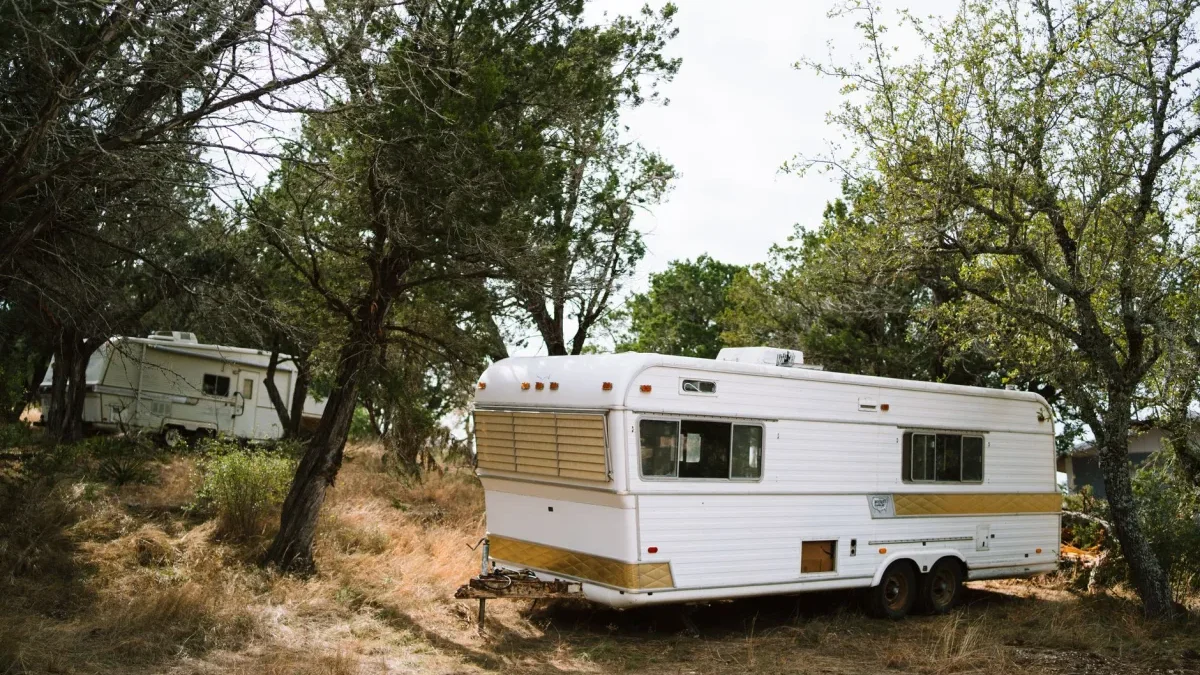
The first camper I ever helped wire up belonged to my brother-in-law, who bought a 900-watt generator off a clearance shelf and then wondered why his rooftop air conditioner tripped it every single time. He’d done the math on his phone, sort of, but he’d forgotten that AC units pull two to three times their running watts the instant the compressor kicks on. We ended up returning it that weekend.
I spent twelve years as a licensed electrician before I moved into backup power full time, and the camping crowd asks me the same handful of questions over and over. What size? How loud? Gas or something else? None of it is complicated once someone lays it out plainly, so that’s what I’m doing here.
If you camp a few weekends a year and want the fridge, some lights, and a way to charge phones, you don’t need to spend a fortune. You just need to buy the right thing once.
Key takeaways
- Match watts to what you actually run. A camper with a rooftop AC usually needs a 3,000 to 4,000 running-watt inverter unit; tent campers can get by with 1,000 to 2,000.
- Inverter generators are quieter and produce clean power that won’t fry laptops or TVs. For RV and camping, they’re worth the premium.
- Never run a generator inside, under an awning, or near an open window. Carbon monoxide has killed people doing exactly that.
- Dual-fuel models give you propane as a backup when gas stations are far apart.
Why a portable generator for RV and camping is a different animal
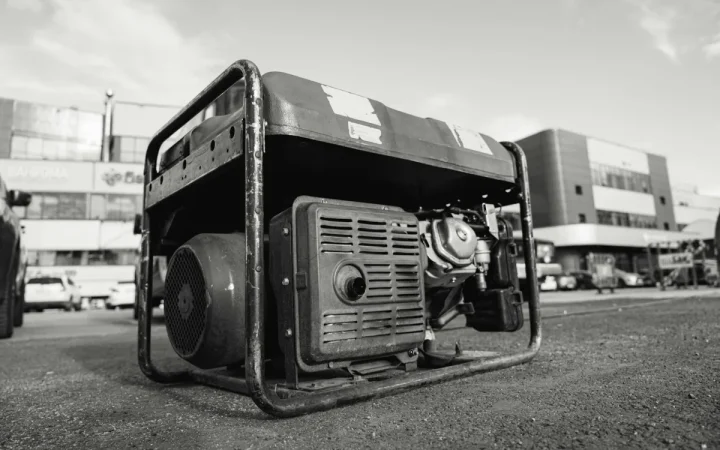
A home backup unit sits on a pad and runs your well pump and furnace during an outage. A portable generator for RV and camping has a different job: it has to be light enough to lift into a truck bed, quiet enough that you don’t ruin the campground for everyone in earshot, and clean enough that it won’t damage sensitive electronics.
That last part matters more than people expect. Cheap open-frame generators throw out “dirty” power with voltage that wanders around. Your fridge won’t care. Your laptop, your CPAP machine, and your RV’s control board absolutely will.
That’s why I steer nearly everyone toward an inverter model for this use. They cost more up front, but they idle down when the load is light, sip fuel, and stay reasonably quiet. If you want the deeper background on the category, the beginner guide to portable generators for home backup covers the fundamentals that carry over.
Sizing it: the numbers that actually matter
Here’s where most first-timers go wrong. They add up the running watts of everything they own, buy exactly that, and then the whole rig stalls the moment two things turn on at once.
Two numbers matter for every appliance: running watts (what it draws steadily) and starting watts (the surge when a motor spins up). Air conditioners, fridges, and water pumps all have a starting surge. You size the generator for the biggest surge plus everything else running at the same time.
A rough load table
| Appliance | Running watts | Starting watts |
|---|---|---|
| 13,500 BTU RV air conditioner | 1,300 | 2,800 to 3,200 |
| RV refrigerator (electric mode) | 600 | 1,200 |
| Microwave (small) | 900 | 900 |
| Coffee maker | 800 | 800 |
| Lights + phone/laptop charging | 150 | 150 |
Run the AC and the fridge kicks on at the same time, and you’re already past 4,000 starting watts. That’s why I tell RV owners with a rooftop unit to look hard at a 3,500 to 4,000 running-watt inverter, not a 2,000. Tent campers running a cooler, a fan, and some lights? A quiet 2,000-watt unit is plenty and easy to carry.
A generator produces carbon monoxide you can’t see or smell. Run it outdoors only, at least 20 feet from your camper with the exhaust pointed away from doors, windows, and vents. Never under an awning or in a truck bed with a topper. The CPSC ties hundreds of deaths a year to portable generators, and nearly all of them were preventable.
If you want to walk through the load math for your exact setup, the piece on how much wattage a portable generator needs has a worksheet I point people to constantly.
Noise, or how to not become the campground villain
Most quiet campgrounds cap generators around 60 to 65 decibels, and some national forest loops ban them outright during quiet hours. A decent inverter runs about 52 to 58 dBA at a quarter load, roughly the volume of a normal conversation. An open-frame contractor generator can hit 72 to 78 dBA, which is closer to a garbage disposal running next to your tent.
On a job last fall I measured a neighbor’s bargain generator at 76 decibels from 25 feet. You could hear it three campsites over. Nobody wants to be that person.
Buy the inverter. Point the exhaust away from people. Everyone sleeps better.
Fuel: gas, propane, or both
Straight gasoline is cheapest and easiest to find, but it goes stale in a few months and gums up carburetors if you let it sit. Propane stores for years, burns cleaner, and doesn’t varnish anything, though you lose a little power output and it struggles in real cold.
For camping I usually recommend a dual-fuel unit. You keep a small can of gas for power-hungry days and run propane off a 20-pound tank for long, quiet stretches. It’s flexibility that pays off when the nearest station is 40 miles down a dirt road.
I’ve written up the tradeoffs in more detail in this explainer on dual-fuel portable generators, and if you’re weighing the fuels head to head, the generator fuel types comparison lays them side by side.
A quick runtime reality check
Manufacturers quote runtime at 25 percent load, which is optimistic for RV use. A 4,000-watt inverter with a 2.5-gallon tank might advertise 10 hours, but run your AC most of the night and you’ll get closer to 6 or 7. Plan on refueling, and always let the unit cool a few minutes before you do it.
What to actually check before you buy
I’ve returned enough generators with customers to know the specs that get overlooked. Walk through this before you hand over a card.
- It’s an inverter model (clean power, quieter, fuel-sipping)
- Running watts cover your biggest surge plus your steady load, with headroom
- It has a 30-amp RV outlet (TT-30R) if you’re plugging in a camper directly
- Built-in CO shutoff sensor, now standard on better units
- Rated noise under 60 dBA at quarter load
- Dual-fuel if you camp far from gas stations
- A weight one person can lift, or wheels if it’s over 60 pounds
One mistake I see all the time: people buy a generator with only 120-volt household outlets, then discover their 30-amp camper cord won’t plug in without an adapter dogbone. Get the right outlet from the start, or buy the adapter the same day.
Your next move before the next trip
Pull the labels on your camper’s air conditioner and fridge, jot down the running watts, and add roughly 2,000 for the biggest starting surge. That single number tells you which size to buy, and it takes about ten minutes with a flashlight.
Then read up on safe portable generator operation before your first outing, and keep the exhaust rule burned into memory. For the official word on placement and carbon monoxide, the CPSC’s portable generator safety page and Ready.gov’s guidance on power outages are both worth five minutes.
Buy once, size it right, run it outside. That’s the whole game, and your future self at a quiet campsite will thank you.