Most generators don’t die from hard use. They die from sitting still. I’ve pulled the cover off more than one portable unit in October that ran fine in July, only to find a carburetor gummed shut with varnish and a battery flat as a pancake.
The homeowner always says the same thing: “But I never touched it.” That’s exactly the problem. Fuel breaks down, moisture creeps in, and rubber parts dry out while the machine sits in the corner of the garage doing nothing.
Good news is that putting a generator away correctly takes about an hour and a few cheap supplies. Do it once at the end of the season and you buy yourself a machine that starts on the first or second pull come spring.
Key takeaways
- Stale fuel is the number one killer. Either stabilize it or run the tank dry before storage.
- Change the oil before it sits, not after. Old oil is acidic and eats bearings while the engine is parked.
- Keep the battery charged and the unit off bare concrete in a dry, ventilated spot.
- Never store gasoline or run a generator indoors, including a closed garage or shed with the door shut.
Why generator storage goes wrong in the first place
Gasoline starts to degrade in about 30 days. By month three it’s forming gum and varnish, and by month six that residue has coated the tiny passages inside your carburetor. Those jets are narrower than a strand of spaghetti, so it doesn’t take much to plug one.
A mistake I see all the time is folks topping off the tank in November and walking away until the first outage. Then they’re standing in the dark yanking a starter cord that won’t catch. Proper generator storage is really just controlling three things: the fuel, the oil, and the moisture.
Never store gasoline containers or run an engine inside your home, basement, or a closed garage. Generator exhaust contains carbon monoxide, which is odorless and can be fatal within minutes. The CPSC recommends keeping a running generator at least 20 feet from any building, with the exhaust pointed away.

Deal with the fuel first
You’ve got two honest options here, and both work. Which one you pick depends on how long the machine is going to sit.
Option one: stabilize and top off
For storage of three to six months, add a fuel stabilizer like STA-BIL to a full tank. A full tank leaves less room for condensation to form on the metal walls. Follow the dosage on the bottle, usually about one ounce per two and a half gallons.
Here’s the part people skip: run the engine for 10 to 15 minutes after you add it. The stabilizer has to reach the carburetor, not just sit in the tank. Idle it, then shut it down.
Option two: run it dry
For longer layups, or if you just don’t trust old gas, drain the tank and then run the engine until it stalls from fuel starvation. This empties the carburetor bowl so there’s nothing left to varnish. On a job last winter I found two units side by side, same age, same brand. The one that got run dry the previous fall started on the second pull. The full-of-old-gas one needed a carb rebuild.
If you run a dual-fuel or propane model, storage is easier on the fuel side. Propane doesn’t go stale. Still change the oil and mind the battery. Curious which setup suits you long-term? Our breakdown of generator fuel types compared walks through the tradeoffs.
Change the oil before it sleeps
Used oil collects combustion byproducts that turn mildly acidic. Leave that in the crankcase for six months and it slowly etches your bearings and cylinder walls. Fresh oil is cheap insurance, usually five to eight dollars a quart, and most portables take under a quart.
Warm the engine for a couple of minutes first so the oil drains faster and carries more gunk out with it. Drain it, refill with the weight your manual calls for, and you’re set. While you’ve got the panels off, this is a smart moment to run through a broader generator maintenance checklist so nothing slips past you.
Battery, moisture, and where it lives
Electric-start units have a small battery that will self-discharge over the winter and can freeze if it drops low enough. A dead lead-acid battery left in the cold often won’t recover.
- Put the battery on a trickle charger or smart maintainer for the season.
- Set the generator on a shelf, pallet, or rubber mat, not directly on concrete, which wicks moisture up into the frame.
- Store it in a dry, ventilated shed or garage bay, not a damp crawlspace.
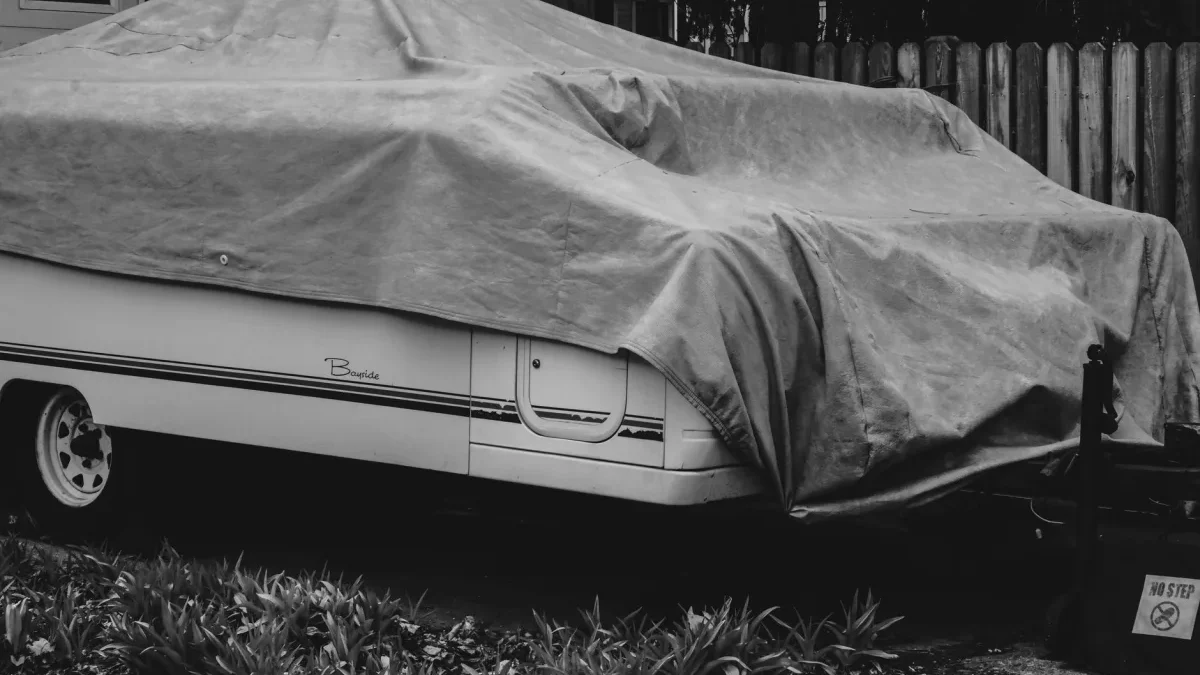
- Cover it with a breathable generator cover, never a sealed plastic tarp that traps condensation.
- Pull the spark plug, add a teaspoon of oil to the cylinder, pull the cord twice to coat the walls, then reinstall the plug.
That last one is optional but worth the five minutes on a unit you won’t touch for many months. It keeps the cylinder from flash-rusting.
A quick comparison: stabilize vs. run dry
| Factor | Stabilize and store full | Run the tank dry |
|---|---|---|
| Best for | 3 to 6 month layups | 6+ months or unknown fuel |
| Effort | Add stabilizer, run 15 min | Drain tank, idle to stall |
| Cost | ~$10 bottle, treats many gallons | Free, minus lost fuel |
| Carburetor risk | Low if done right | Lowest |
| Spring startup | Usually first or second pull | Usually first pull |
Cold climates need a little extra
If you live somewhere that dips below freezing and you might actually need the generator mid-winter, storage and readiness blur together. You want it protected but also able to start when it’s 10 degrees out.
That usually means a battery warmer or an oil pan heater, plus the right winter-weight oil. I’ve laid out the specifics in our piece on cold weather kits and warmers. And if you’re wiring the unit into your home, make sure grounding is handled correctly per our guide on how to ground a generator safely before you rely on it in a storm.
Your spring wake-up call
Come the first warm week, don’t wait for an outage to find out if your work paid off. Pull the cover, check the oil level, top off with fresh fuel if you ran it dry, and start it up. Let it run 15 minutes under a small load, like a couple of shop lights or a fan.
If it hesitates, surges, or smokes, catch it now while the hardware stores are open and the weather is calm. A rough start in April is a warning, and knowing the signs your generator needs repair means you fix it on your schedule instead of in the dark during the next big blow. For more on safe operation and refueling, the Ready.gov generator safety page is a solid reference to keep handy.