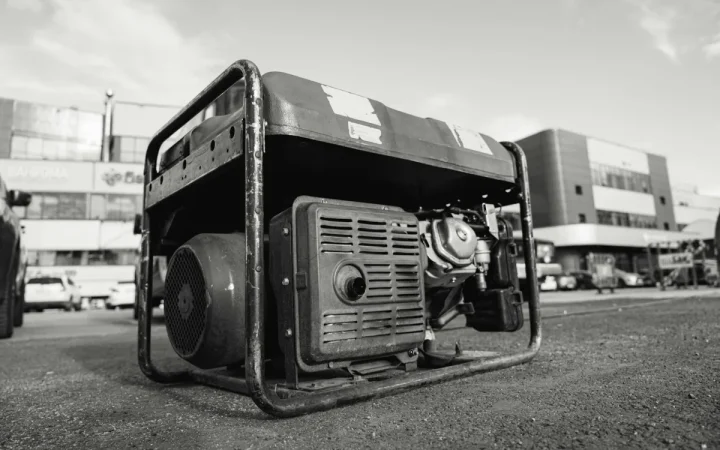

The first time I got called out to a carbon monoxide scare, it was a young couple two winters back. Power had been out for a day, they’d run their generator in the attached garage with the door “cracked open,” and by morning both had splitting headaches and couldn’t figure out why. They were lucky. The detector I’d installed for them a year earlier is the only reason they walked out of that house.
Portable generator carbon monoxide poisoning is not a freak accident. It’s predictable, it’s fast, and it happens to careful, smart people who just didn’t know one or two things. Every winter storm season the emergency rooms fill up with the same story.
So let me walk you through what I tell every customer, in plain language, over the fence.
Key takeaways
- Never run a generator in a garage, shed, basement, or breezeway, even with doors and windows open.
- Place the unit at least 20 feet from the house with the exhaust pointing away from every door, window, and vent.
- Install battery-powered CO alarms on every level of the home; a single generator can pump out CO faster than you’d believe.
- Headache, dizziness, or nausea during an outage means get outside first, ask questions later.
Why portable generator carbon monoxide is so dangerous
Carbon monoxide is a byproduct of burning gasoline, propane, or natural gas. A single portable generator running on gas can produce as much CO as hundreds of idling cars. That’s not a typo.
Here’s the part that gets people. CO has no color, no smell, no taste. You cannot detect it with your senses. By the time you feel “off,” you’ve already absorbed a dangerous dose, and the gas has a nasty habit of making you sleepy and confused right when you need to be thinking clearly.
The Consumer Product Safety Commission tracks roughly 85 generator-related CO deaths a year in the U.S., and the real number of near-misses is far higher. It moves fast, too. In an enclosed space, a generator can bring CO to lethal levels in under five minutes.
There is no safe way to run a portable generator indoors. Not in a garage with the door up. Not in a basement with a window open. Not in a carport tucked against the house. If it burns fuel, it goes outside, far from the walls.

Where to put the generator (the 20-foot rule)
The single most important decision you make is placement. Get this right and you’ve eliminated the vast majority of the risk.
Keep the generator at least 20 feet from your house, and aim the exhaust away from the building. Not toward an open window, not toward the dryer vent, not toward the crawlspace access. Twenty feet sounds like a lot until you’re dragging a 150-pound unit across a snowy yard at 2 a.m., which is exactly why people cheat on it.
The spots that fool people
A mistake I see all the time is the “open” garage. Folks figure an open door means fresh air. It doesn’t. CO pools and drifts back into the living space through the door to the house, and it lingers in the garage for hours after you shut the unit down.
Same goes for covered porches, screened patios, and those little breezeways between the house and the garage. If it has a roof and two or more walls, treat it like indoors. When a storm’s coming, plan your safe placement before you need the power, the same way you’d size the unit ahead of time using our guide on how much wattage a portable generator needs.
Buy a heavy-duty outdoor-rated extension cord, at least 12-gauge for a 30-foot run, so distance is never your excuse to bring the generator closer. A good cord runs $40 to $70 and pays for itself the first storm.
CO alarms are your backstop, not your plan
Placement is your first line of defense. Alarms are your second, and you want both.
Put a battery-powered or battery-backup CO alarm on every level of your home and near sleeping areas. During an outage your hardwired alarms are dead unless they have battery backup, so this is exactly when a lot of homes go unprotected. Test them before storm season, not during.
Some newer generators come with built-in CO shutoff sensors that kill the engine when they detect dangerous levels nearby, look for “CO Guard,” “CO Sense,” or a similar label. It’s a genuinely good feature, but I still treat it as a bonus, not a replacement for keeping the machine outside and far away.
- CO alarms on every floor and outside each bedroom
- Fresh batteries installed before outage season
- Generator staged 20+ feet out with exhaust facing away
- Outdoor-rated extension cord long enough to reach
- A clear rule with the family: symptoms mean go outside now
Know the symptoms before you need to
CO poisoning mimics the flu, which is part of what makes it so sneaky. Learn the early signs so you catch it while you can still act.
| Exposure level | What you’ll feel |
|---|---|
| Early / mild | Dull headache, slight dizziness, tiredness, mild nausea |
| Moderate | Throbbing headache, confusion, blurred vision, rapid heartbeat |
| Severe | Vomiting, loss of coordination, unconsciousness, a medical emergency |
The tell is when more than one person feels sick at the same time, or the family pet is acting off. That pattern points to something in the air, not a bug going around.
If you suspect CO: get everyone outside into fresh air immediately, then call 911 from outside. Don’t stop to open windows or hunt for the source. Fresh air first.
Fuel choice changes the math a little
All combustion produces CO, but not in equal amounts. Propane burns cleaner than gasoline and puts out noticeably less carbon monoxide, which is one reason I nudge nervous first-timers toward a dual-fuel portable generator that can run on either.
Cleaner is not the same as safe, though. Propane and natural gas units still produce enough CO to kill you indoors, so every placement rule above applies no matter what you feed the machine. If you’re still weighing options, our breakdown of generator fuel types compared lays out the tradeoffs on cost, storage, and emissions.
For homeowners who hate the whole outdoor-placement dance every storm, a permanently installed whole-house standby generator vents like a furnace and lives safely outside by design. That’s a bigger investment, figure $4,000 to $12,000 installed, but it takes the human error out of the equation.
Your storm-season game plan
Do the boring prep now, while the sun’s out. Walk your yard and pick the generator spot today, 20 feet out, exhaust aimed at the fence, not the house. Mark it if you have to.
Test your CO alarms, drop in fresh batteries, and make sure every adult in the house knows the one rule that matters: feeling sick during an outage means everyone goes outside first. If you’re new to all of this, spend twenty minutes with our beginner’s guide to portable generators for home backup and the companion piece on using a portable generator safely before the next warning hits.
For the official word, the CPSC keeps a clear, no-nonsense reference on portable generator safetyand the CDC has a solid page on recognizing and preventing CO poisoning. Bookmark both. The generator’s whole job is to keep your family comfortable through a rough night, placed right, it does that without ever putting them at risk.