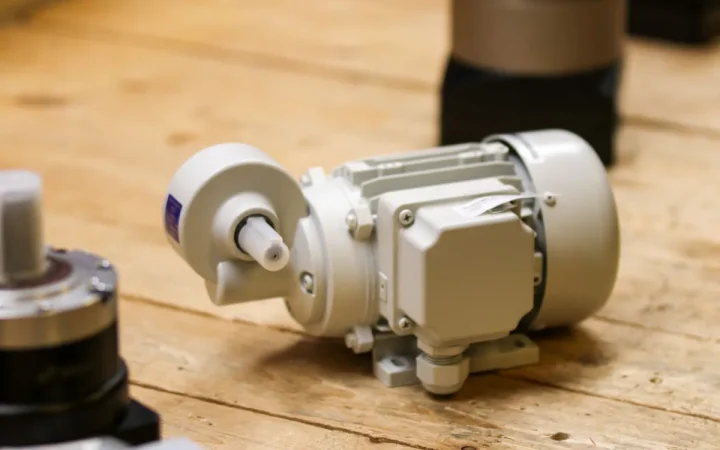
Picture this. A homeowner in Georgia calls me because their brand-new 22 kW standby unit still stumbles when the central air kicks on. The lights dip, the generator groans, and for about a second everyone in the house holds their breath. The generator was plenty big for the running load. The problem was that one-second slam when the AC compressor tried to spin up.
That slam is called locked-rotor amperage, and it’s the reason so many people buy a generator two sizes bigger than they actually need. A compressor that hums along at 15 amps can pull 70 or 80 amps for a fraction of a second at startup. Your generator has to survive that spike, so it gets sized for the worst half-second of its life.
A soft starter changes the math. It’s a small device that ramps the motor up gently instead of hitting it with full voltage all at once, and it can genuinely let you drop down a generator size or two. Let me walk you through when it works, when it doesn’t, and what it costs.
Key takeaways
- Most homes are sized for one appliance’s startup surge, not their real running load.
- A soft starter cuts an AC compressor’s inrush by roughly 50-70%, so a smaller generator can handle it.
- Expect to spend $300-$500 installed per unit, which is far less than jumping up a generator size.
- They work great on single-motor loads like AC and well pumps, less so on everything else.
What a soft starter generator pairing actually does
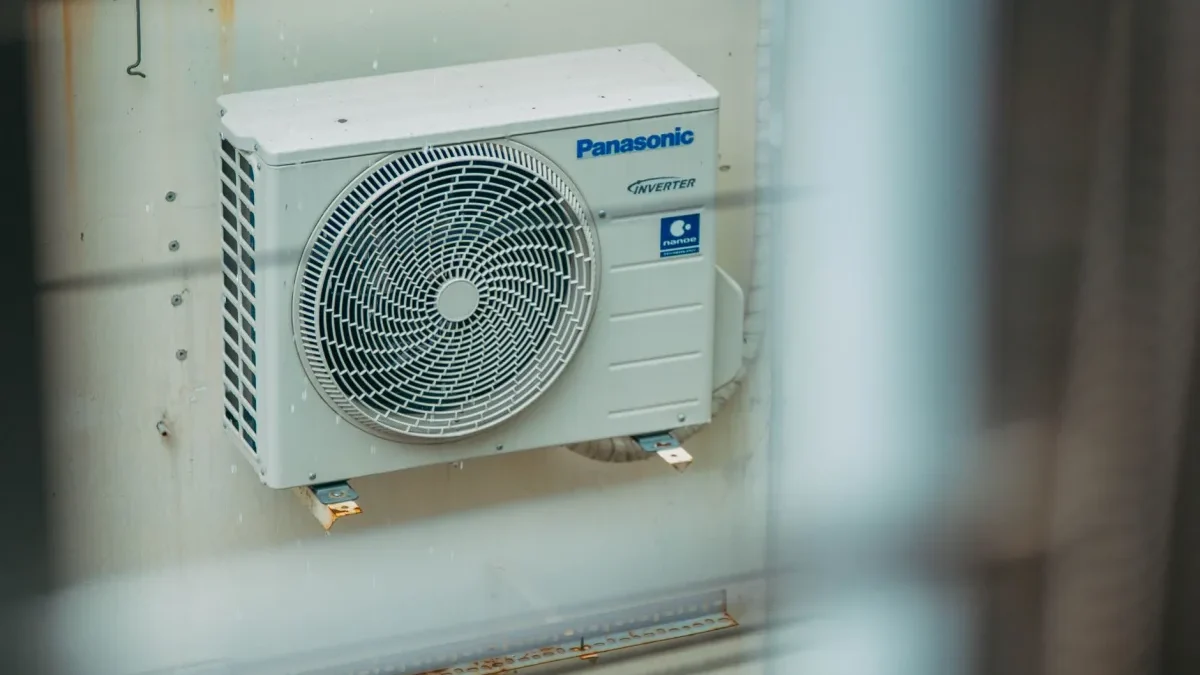
A standard air conditioner compressor uses what’s called a direct-on-line start. Full voltage, full torque, right now. That’s simple and cheap, but it means a huge current spike for the first quarter-second while the motor gets moving.
A soft starter sits between your breaker and the compressor. Instead of slamming it with 240 volts instantly, it eases the voltage up over a second or two using electronics. Same motor, same job, gentler launch.
The number that matters is inrush current. A typical 3-ton AC unit might have a locked-rotor amperage around 70-90 amps. With a good soft starter, I’ve measured that same unit starting at 25-35 amps. That drop is the whole reason this trick works for generator sizing.
The most popular residential unit is the Micro-Air EasyStart, built specifically for single-phase AC compressors. It’s the one I install most often on backup-power jobs because it’s designed for exactly this problem.
Why one appliance sets your whole generator size
Here’s the thing most sizing guides gloss over. Your generator has to handle two very different numbers: how much power your house draws while everything runs, and how much it draws in the instant a big motor starts.
The running number is usually reasonable. A modest home might pull 5,000-7,000 watts with the essentials going. But if your central air surges to 12,000-15,000 watts for half a second at startup, the generator has to be built for that surge or it’ll stall.
So people buy the bigger unit. I’ve seen folks jump from a 14 kW to a 22 kW standby purely because of one compressor. That’s often a $2,500-$4,000 difference in equipment alone, before the bigger gas line and pad.
If you want to see how these two numbers play together, our walkthrough on how to size a generator for your home lays out the running-versus-starting math in plain terms.
The single biggest offender
Nine times out of ten, the appliance forcing the upsize is the central air conditioner or heat pump. Well pumps come in second. Both use big single-phase motors, and both are perfect candidates for a soft starter.
Real numbers from a job last winter
Last February I worked a house outside Asheville with a 3.5-ton heat pump and a well pump. The owner had a quote for a 20 kW standby. His actual running load, everything on, was about 8 kW.
We put a soft starter on the heat pump for $420 installed and another on the well pump for $360. That knocked the combined startup surge down enough that a 13 kW unit handled the whole house comfortably. He saved roughly $3,200 on the generator and its install, minus the $780 in soft starters. Net win of about $2,400.
A mistake I see all the time is people assuming the soft starter has to power the whole house. It doesn’t. It only tames the one or two motors that were bullying your generator in the first place.
| Load | Startup surge without soft starter | Startup surge with soft starter |
|---|---|---|
| 3-ton central AC | ~13,000 W | ~4,500 W |
| 3.5-ton heat pump | ~15,000 W | ~5,500 W |
| 1 HP deep well pump | ~7,000 W | ~3,000 W |
Those figures are ballpark and vary by brand, but the pattern holds: the surge roughly halves, sometimes better.
When a soft starter is the wrong tool
I won’t pretend this is magic. Soft starters shine on single, large motor loads. They do nothing for a house that’s simply drawing a lot of steady power.
If your running load genuinely needs 12 kW because you’ve got two AC zones, an electric range, and a hot tub all going, no soft starter fixes that. You need the capacity. In that situation, read up on sizing a generator for a large home before you spend a dime on gadgets.
They also don’t help with resistive loads. Electric water heaters, ovens, and space heaters have no startup surge to soften, so a soft starter is pointless there.
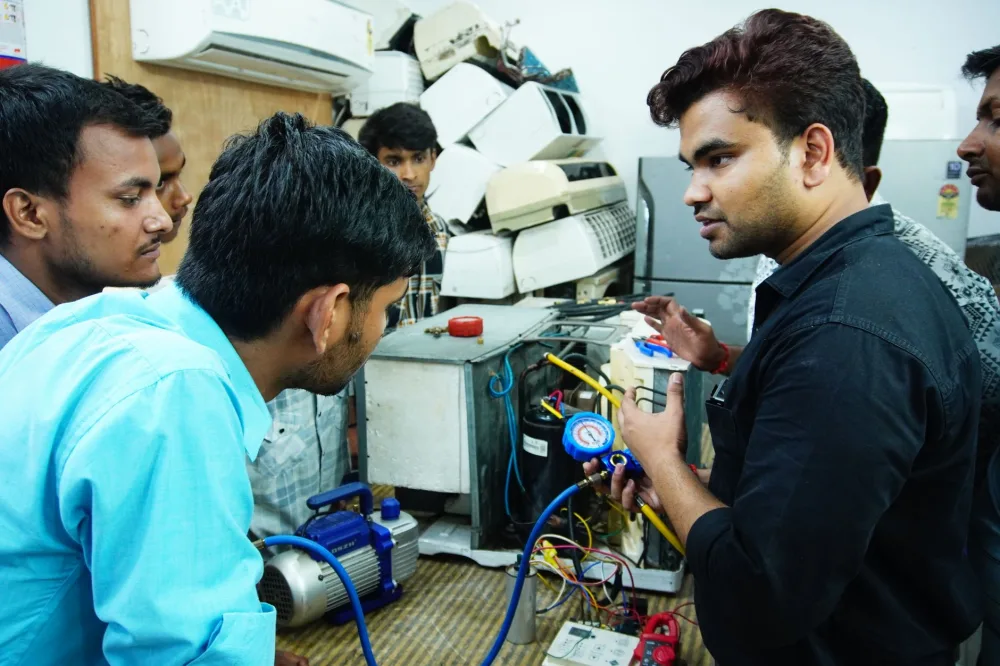
A soft starter is wired into 240-volt compressor circuits and, on some units, low-voltage control wiring inside the condenser. If you’re not comfortable inside an energized disconnect, hire a licensed electrician. Motor circuits are an easy place to get hurt or void your HVAC warranty.
An alternative worth knowing
Sometimes the smarter move isn’t a soft starter at all. A load manager, sometimes called a load shedder, simply prevents two big things from starting at the same instant. If your problem is timing rather than raw surge, that approach covered in our piece on generator load management and load shedding might be cheaper.
A quick checklist before you buy
Run through this before you order anything. It’ll save you a return and a headache.
- Find your compressor’s locked-rotor amperage on the condenser nameplate.
- Confirm the motor is single-phase (nearly all residential ones are).
- Check that a soft starter model is rated for your exact tonnage.
- Verify your HVAC warranty allows a third-party start device.
- Add up your true running load so you know the generator size you’re aiming for.
For smaller homes, the payoff is often even bigger, because dropping one generator size matters more on a tight budget. Our notes on sizing a generator for a small house or apartment pair well with a single soft starter on the AC.
And if you’re planning a permanent installation, remember the soft starter is only one piece. You’ll still want the right transfer switch for your setup so the generator and utility power never fight each other.
Where to point your money next
If one appliance is forcing you into a bigger, thirstier, more expensive generator, price out a soft starter first. Pull the nameplate numbers off your condenser, get a real running-load total, and compare the $300-$500 device against the cost of the next generator size up. Nine times out of ten on a single-AC home, the small box wins.
Then get a licensed installer to spec both the soft starter and the generator together, since the whole point is choosing them as a matched pair. The U.S. Department of Energy’s guidance on central air conditioning efficiency is a solid primer on how these compressor loads behave, and it’s worth a read before you talk to a contractor.