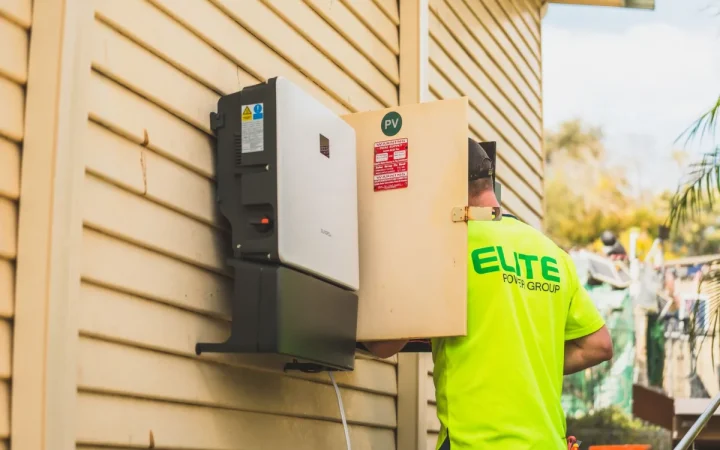

The first time I wired a standby unit for a house with a home dialysis setup, the homeowner walked me through her routine while I ran conduit. Four hours on the machine, three nights a week, no room for interruption. Her old plan for outages was a car battery and a prayer. That job stuck with me, because for a lot of families the power going out isn’t about a warm fridge or a dark TV. It’s about a machine that has to keep running.
I spent twelve years as a licensed electrician before I moved into backup power full time, and medical-equipment jobs are the ones I take most seriously. The math is different. The stakes are different. And the mistakes people make are usually the same handful, over and over.
So let’s talk honestly about what a generator for home medical equipment actually needs to do, what it costs, and where folks get tripped up.
Key takeaways
- Size the generator around your critical medical loads first, then add comfort loads if the budget allows.
- Most home oxygen concentrators pull 300 to 600 watts; a 22 kW air-cooled standby covers that plus a normal house easily.
- An automatic transfer switch matters more than raw wattage here, because it restores power in about 10 to 30 seconds without you touching anything.
- Always keep a battery backup or UPS on the machine itself as a bridge during the transfer delay.
- Register your address with your utility’s medical priority list, but never treat that as your only plan.
Why a generator for home medical equipment is a different job
A regular backup install is about convenience. You want the lights on, the fridge cold, maybe the well pump working so the toilets flush. If it takes a minute to kick over, nobody cares.
Medical is not that. If a home ventilator or an oxygen concentrator loses power, the clock starts immediately. That changes how I approach every part of the design, from the size of the unit to the transfer switch to what I tell the family to keep in a drawer for backup.
A mistake I see all the time: people buy a generator sized for the whole house and assume that automatically covers the medical gear. It usually does on wattage. What it often misses is the transfer time and the backup-to-the-backup. Wattage is the easy part.
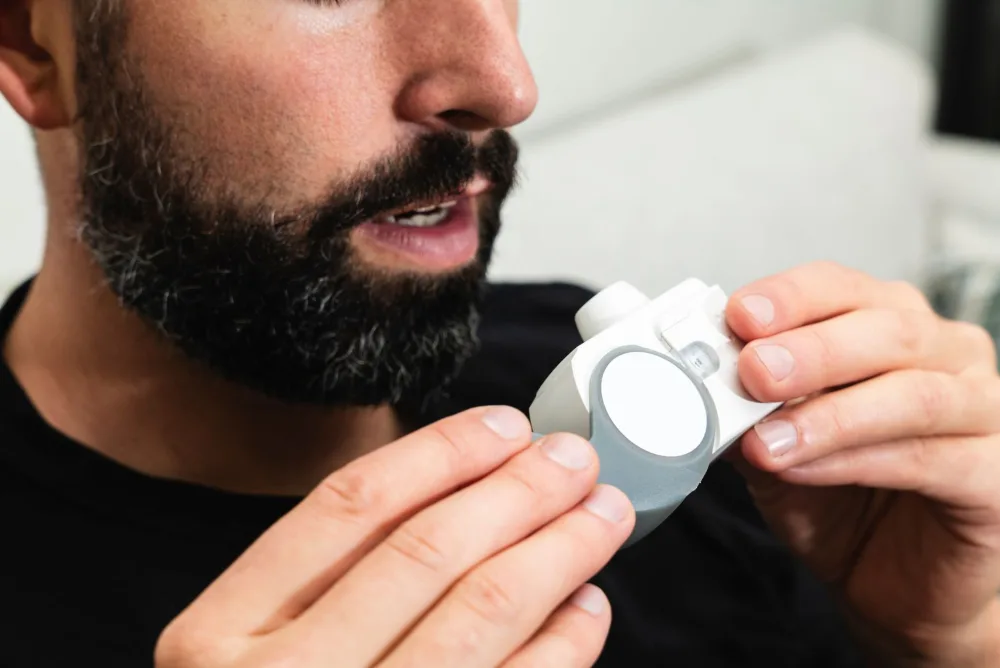
Figure out your critical loads before anything else
Before you shop for a single spec, write down every piece of equipment that cannot go dark and what it draws. The nameplate on the device or the manual gives you the watts, or you multiply volts by amps.
Here’s a rough table from units I see in homes. Your exact numbers will vary, so confirm with your own labels.
| Equipment | Typical running watts | Notes |
|---|---|---|
| Oxygen concentrator | 300 – 600 W | Surges higher on startup |
| CPAP / BiPAP | 30 – 90 W | Heated humidifier adds ~100 W |
| Home ventilator | 100 – 400 W | Has internal battery, but limited |
| Home dialysis machine | 350 – 1,500 W | Water heater cycles push it high |
| Electric hospital bed | 100 – 400 W | Only draws when adjusting |
| Powered wheelchair charger | 200 – 400 W | Charge overnight when possible |
Add up the ones that run at the same time. For most families I work with, the true critical load lands somewhere between 800 and 2,500 watts. That’s a small number, and it’s good news, because it means you have options at every budget.
Never run any generator, portable or standby, inside a garage, basement, or near open windows. Carbon monoxide from generators kills people every storm season. A permanently installed standby unit sits outside like an AC condenser, which is one more reason I steer medical families toward them over portables.
Picking the right unit for the load
The case for a whole-house standby
For a home with medical equipment, I almost always recommend a permanently installed standby generator over a portable. It starts on its own, runs on natural gas or propane so nobody’s hauling gasoline in a storm, and pairs with an automatic transfer switch. On a job last winter, the homeowner’s father was on oxygen, and the power blinked out at 2 a.m. during an ice storm. The unit started, transferred, and the family slept through it. That’s the whole point.
A common air-cooled unit in the 18 to 24 kW range runs roughly $4,500 to $6,500 for the generator, plus installation. If you want to see how those numbers break down piece by piece, I walk through them in our full standby generator price breakdown. For a deeper look at how these systems work as a whole, our complete guide to whole-house standby generators is a good starting point.
When a portable makes sense
Sometimes budget rules the day, and a portable is what a family can afford right now. It can work as a stopgap if you’re disciplined about running it safely outside and using a proper transfer setup, not a suicide cord. I’d rather someone have a well-managed portable than nothing. Our beginner guide to portable generators covers doing it right.
The catch with a portable is that it doesn’t start itself. Someone has to be home, awake, and able-bodied to fire it up. For a household where the person needing power is also the only adult there, that gap is exactly the problem you’re trying to solve.
Sizing without overpaying
Here’s where people burn money. They hear “medical” and buy the biggest unit on the lot. You rarely need it. A 22 kW air-cooled standby produces about 18,000 running watts on natural gas, and your critical medical load is maybe 2,000 of those. The rest is for your fridge, furnace blower, and lights.
The right question isn’t “how big can I get.” It’s “what do I actually need running at once.” I lay out the full method in our piece on how to size a generator for your home, and there’s a simpler overview in what size standby generator an average home needs.
If you’re weighing a big-house system, air-cooled versus liquid-cooled is a real fork in the road on both price and lifespan, which I break down in our air-cooled vs liquid-cooled comparison.
Size for your critical loads plus a comfortable buffer, then stop. The money you save by not oversizing is better spent on a quality automatic transfer switch and a UPS on the machine itself.
The backup for your backup
Even a standby unit takes 10 to 30 seconds to detect the outage, start, and transfer power. For most gear that pause is nothing. For a ventilator, thirty seconds of dark is thirty seconds too many.
That’s why I never leave a medical install without a battery bridge on the device itself. A basic uninterrupted power supply, the same kind that protects a computer, holds the machine up during the transfer delay. Many ventilators and concentrators have internal batteries too, but those are limited and age out, so I treat them as one layer, not the whole plan.
- A UPS or battery backup rated for at least 15 minutes on each life-support device
- The device manufacturer’s spare internal battery, charged and rotated
- Your utility’s medical priority registration on file
- A printed contact sheet: power company, equipment supplier, and a neighbor with a generator
- Enough fuel or gas service confirmed for a multi-day outage
- A tested plan for where to go if everything fails
Register your address on your utility’s medical certificate or priority-restoration list. It can move you up the repair queue and flags you against disconnection. The U.S. Department of Energy has good background on backup power planning for medical needs at energy.gov, and ready.gov keeps a solid power outage preparedness page worth reading with the family.
Your next move this week
Don’t wait for a spec sheet or a salesperson. Tonight, walk the house and write down every device that can’t lose power and the watts on its label. Add them up. That single number tells you more than any brochure.
Then call your equipment supplier and your utility, and ask two questions: what’s my device’s internal battery runtime, and how do I get on the medical priority list. With that in hand, a good installer can spec the right unit in one visit. The families who handle this calmly are the ones who did the boring homework before the storm, not during it.